It does not matter what industry you are in. Be it retail, food service, hospitality, or manufacturing, every business is experiencing rising costs of goods and labor. For 46% of small businesses alone, inflation is their top concern, with 55% of them increasing prices to offset costs. While this solution helps in the short term, it jeopardizes customer retention.
If your operations generate organic material or unconsumable food (commonly called food waste), you have more options than you might think. Investing in and scaling organics recycling for your business can work for your bottom line.
We understand that the onboarding and logistics of establishing an organics recycling program can seem overwhelming. That’s why it literally pays to work with a partner that can help you navigate the operational and service options successfully. In this blog, we’ll take a look at the vast organics recycling network Denali offers and how it can help you scale this part of your business.

How Denali scales organics recycling
Businesses often explore ways to recycle more organic materials, yet many struggle with the fragmented nature of the system. Denali solves this problem by offering an end-to-end solution that includes collection, depackaging, and recycling across 48 states and Puerto Rico.
Our vast network provides options, access and consistency that most food recycling companies don’t have. We have the expertise, experience and infrastructure to scale your sustainable efforts efficiently under one seamless system with the following services:
Unconsumable food collection & recycling
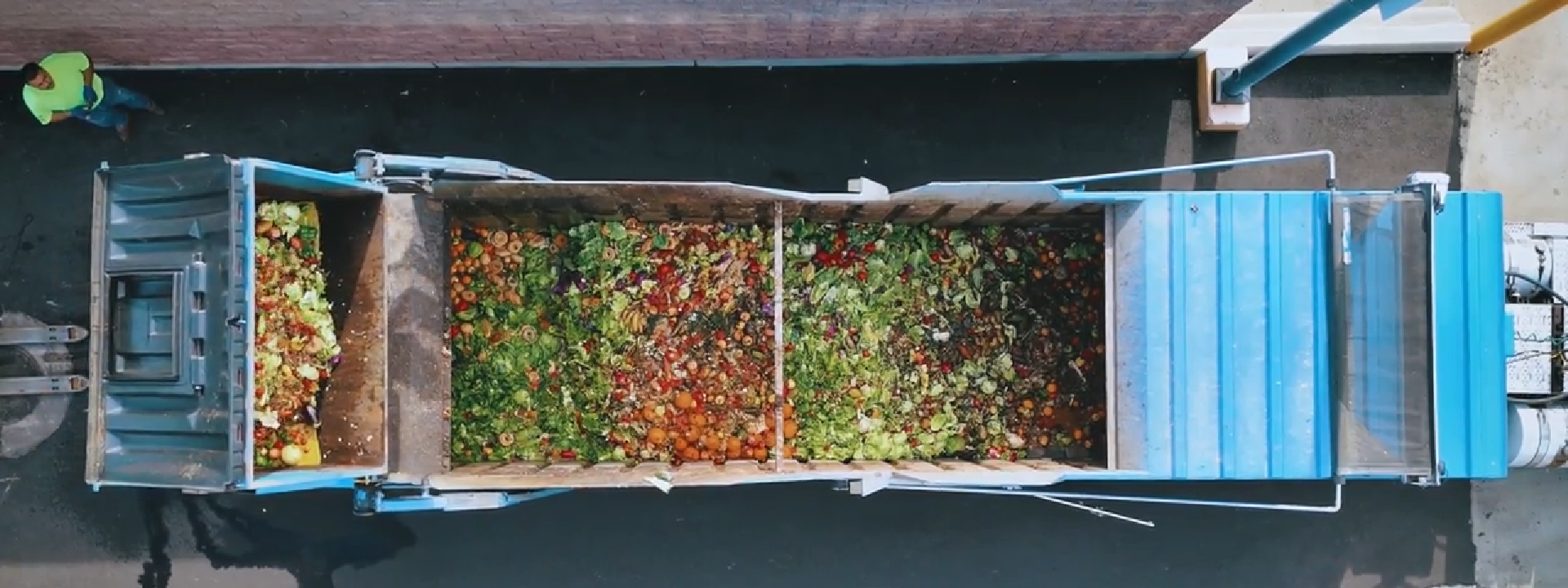
The U.S. generates about 73.9 million tons of food surplus every year. That’s about 31% of our food supply, with the vast majority sent to landfills. With food collection and recycling in place, businesses can take unconsumable food and give it a second life as animal feed, compost, or biofuels. Having collected and recycled billions of pounds of food around the country, we’ve built a strong system that benefits businesses and the communities they service.

The U.S. generates 73.9 million tons of food surplus every year – about 31% of the food supply.
Depackaging
When unconsumable food isn’t removed from its packaging, it creates extra dense weight that increases fees for pickup and disposal. Denali has invested in innovative depackaging technology at our facilities that recycles both food and packaging materials. It also eliminates the labor of depackaging, so employees can spend more time on higher-value tasks.
Liquid destruction
Like food, beverage businesses often end up with unconsumed liquids that need environmentally responsible disposal. Denali manages this by efficiently collecting unused products, then separating the liquid from the packaging, which is recycled, reducing landfill service fees. Denali has the equipment and resources to handle palletized waste of any size — no amount is too small — and we ensure you get a proper certificate of destruction.
DAF skimming
Many food manufacturers produce organic liquid byproducts while processing food. They use Dissolved air flotation (DAF) technology to separate the liquid from food. Denali easily leverages DAF skimming technology to remove these organic byproducts and use them as nutrient-rich fertilizer that can be leveraged in sustainable agriculture. This service provides significant savings on the cost of wastewater treatment further down the line and helps keep food manufacturers operational.
Used cooking oil recycling
Did you know used cooking oil can be recycled? Denali also collects used cooking oil and extends its life by recycling it into biofuel.
How scaling organics recycling improves profits
We know what you’re thinking. All of these programs sound great, but how do they bring in ROI and savings? Let’s break down all the benefits that come from scaling your organic recycling network.

When organic materials are diverted from landfills, they become assets – reducing costs, creating revenue, and improving efficiency.
Reduced disposal costs
Disposing of organic material and unconsumable food costs money. Businesses pay fees by the ton and organic materials can be wet, dense, and heavy, increasing the weight of trash sent to a landfill. On top of that, landfill disposal fees have increased by 30% since 2016, and that trend continues annually. Those fees add up quickly over a year, but with food recycling and depackaging systems in place, companies can significantly reduce the amount of organic material sent to landfills and retain more of their profits.
For example, when Walmart partnered with Denali to help with unconsumable collection and recycling, the store was able to see huge results that cut down on its landfill fees. Walmart used Denali’s depackaging technology and increased the amount of unconsumed food for recycling by 60% which reduced compactor trash by 12%.
New revenue stream
Organics recycling isn’t just a way to save money on disposal fees — it provides new income streams for some businesses. When organic materials are diverted from landfills, they are repurposed into useful products that can often be sold back to consumers.
One of the biggest opportunities for grocery stores participating in organics recycling is the sale of compost made from their unconsumable foods. Walmart capitalized on this opportunity when they began their organics recycling program. Today, they are now part of Denali’s ReCirculate™ Compost program, selling high quality compost made from unconsumed food collected from their stores.
Employee efficiency
For businesses looking to handle their own food recycling efforts, it’s important to note that it can be labor intensive. While a worthy cause to focus on, the process of sorting and depackaging unconsumable foods is incredibly time consuming. This can lead to unnecessary overtime costs or needing to hire more employees to handle the manual workload.
When companies opt into an unused food recycling network, employees can reclaim that time and focus on serving customers. The impact is pretty substantial. Denali has found that customers participating in depackaging services, for example, save 4 to 12 hours per day, per location in labor used to manually depackage food. That’s up to 182 days worth of labor saved and redirected to other meaningful parts of the business.
Compliance
Many states and cities are implementing food waste bans, requiring food-related businesses to recycle unconsumed food instead of sending these valuable organics to landfills. When businesses are found to be in violation of regulations, fines can easily slice away at profits.
When participating in an organics recycling network, the likelihood of fines is decreased, especially when partnering with skilled providers. Businesses are able to obtain data reports and guidelines that ensure that regulations are met.
Brand differentiation
Investing in organics recycling is an excellent way for a business to stand out from their competitors. With rising consumer interest in sustainability and environmentally friendly practices, participating in this style of food management builds brand loyalty with customers.
When HelloFresh needed a solution to deal with unconsumable food at its processing facilities, they turned to Denali to implement a food recycling program. As a result, they were able to divert 4 million pounds of unconsumable food from landfill, preventing 1,307 tons of carbon emissions. That’s the equivalent of driving 1.5 million miles in a car, preventing 1,307 tons of carbon emissions.
Those are big numbers they can now share with their customers. HelloFresh isn’t just talking the talk — they are living their ideals and improving the community around them. And that’s something that truly resonates with consumers.
Bring more value to your business
Implementing organics recycling efforts can make a huge difference for your business. Not only will you be operating more sustainably, but you’ll streamline operations, reduce costs, and ultimately bring more value to your company.
Working with Denali ensures getting a plan that fits your operations, made by experts who have built a national network of infrastructure to deliver on our mission of replenishing the earth by repurposing organic waste. Our team is ready to help your company get a real return from all the organic byproducts your business creates.
Get in touch today to get connected with our experts and start your organics recycling journey.