Sustainability Is Our Business

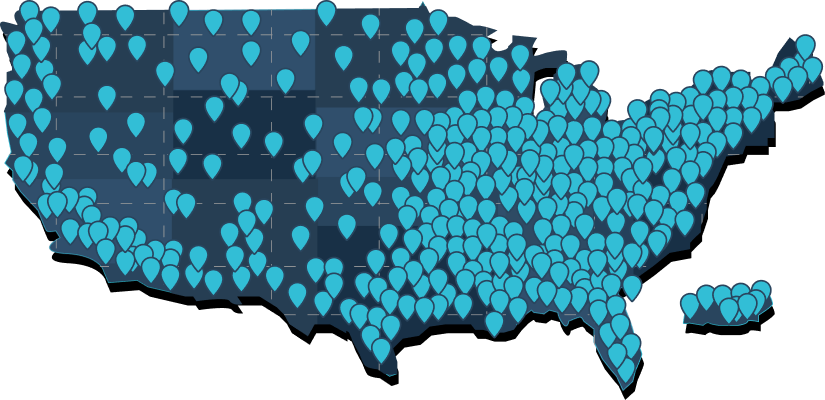
We’re America’s leader in responsible organic recycling
Many companies strive to integrate sustainability across the business, but at Denali, sustainability is our business.
Denali’s core purpose is to recycle organic byproducts into valuable new resources, nationwide.
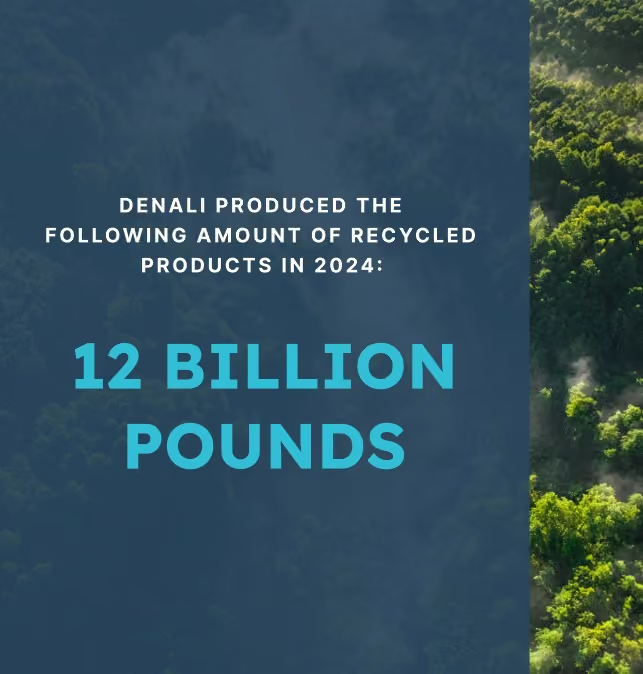
In 2024 alone, we enriched more than 100,000 acres of farmland and produced 12 billion pounds of recycled products:
360 million pounds of animal feed — nourishing more than
2.4 billion pounds of compost, mulch & soils — avoiding an estimated 750,000 metric tons of carbon dioxide
9.6 billion pounds of natural fertilizer — equivalent to 75,757 football fields
12.1 million gallons of biofuel, recycled from used cooking oil
Read more about our day-to-day work building the circular economy in our 2024 sustainability report.
From the Earth, Back to the Earth
In nature, waste doesn’t exist, and at Denali, we share the same philosophy. All organic byproducts we manage are valuable resources, transformed into Feed, Fuel and Fertilizer products that benefit the earth.

FEED
Denali turns organic materials into animal feed, reducing reliance on landfills.

FUEL
We turn organic materials into bioenergy, cutting emissions and boosting energy.

FERTILIZER
Denali creates fertilizers from organics, improving soil health.
In nature, the concept of "waste" does not exist. We believe the same at Denali.
As a Leader Empowering the Circular Economy
As an important contributor to the circular economy, Denali views what others consider “waste” as a valuable resource. Our role in the U.S. EPA Wasted Food Scale spans all recycling pathways. After waste prevention, upcycling and recovery, we ensure that there are options to divert organic byproducts and “close the loop” by recycling organic “wastes” into valuable products.

WASTE PREVENTION
Preventing waste by producing, ordering and serving what is needed results smarter resource use from the beginning.

DONATE
Ensuring food products that are unsold or uneaten are distributed to feed people

UPCYCLE
Repurposing edible food and scraps into new food products
Waste Reduction Pathways
Reducing Food Waste: Denali's Commitment to Sustainability and Communities
Denali supports upstream initiatives to reduce food waste. It is the right thing to do for the environment and for our communities.
Our customers can use food waste recycling data provided by Denali to help identify opportunities to reduce waste, donate and upcycle more food in their operations.

LEAVE UNHARVESTED
Leaving crops unharvested reduces waste, avoids processing and improves soil health.

FEED ANIMALS
Feeding animals can replace traditional feed and reduce environmental impacts.

ANAEROBIC DIGESTION
Anaerobic digestion breaks down organic waste, capturing methane for energy and producES compost or fertilizer.

COMPOST
Composting is an aerobic process that creates compost, improvES soil health, reduces erosion and increases water retention.

APPLY TO FARM LAND
Applying organic byproducts to farm land adds nutrient value as natural fertilizers and are spread, injected or sprayed on farm land enhancing soil health.
RECYCLING patHways
Comprehensive Recycling Solutions for Food Waste and Organic Byproducts
Denali provides a full range of recycling options for food waste and organic byproducts for our customers. We are active in all recycling pathways discussed on the EPA Waste Food Scale, with the exception of “leave unharvested,” which occurs on-farm.
Denali also partners with farmers and growers across the U.S., providing animal feed, compost and natural fertilizer converted from organic waste streams.
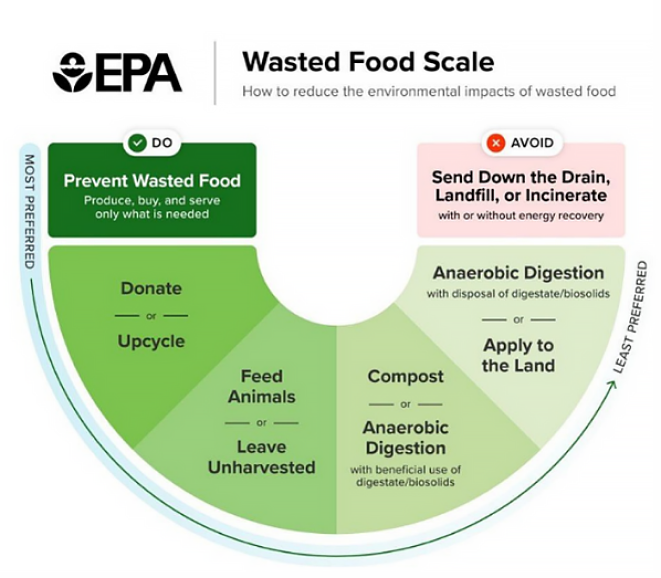
Learn more about the U.S. EPA’s Wasted Food Scale by visiting our blog.
We're also a proud participants in the EPA's Feed It Onward initiative, raising awareness on the environmental impact of food waste and the importance of community food donation programs. Read more about the partnership on our Feed It Onward Page.
%201.avif)
Our Focus
Our core business is sustainability. However, in 2022, we decided to formalize our Environmental, Social, and Governance (ESG) journey by identifying five Focus Areas to guide our priorities and initiatives within the company.

- Greenhouse gas emissions and carbon transition
- Energy and fuel utilization

- Waste management
- Toxic emissions and pollution

- Employee experience
- Human capital management
- Workforce health and safety

- Community involvement
- Volunteerism

- Ethics and compliance
- Data privacy and security
Learn More About Our Sustainable Practices
Stay informed about Denali’s progress and initiatives. Download our latest sustainability report to see how we are making a difference.