Why Farmers Save Money From Recycled Food Waste


Farmers are facing a rise in operational costs, market headwinds, and extreme weather events — all of which cut into profit margins and present challenges to their farm’s survival. Something as foundational to their success as fertilizer costs have doubled since before the pandemic.
Fortunately, there is a ready-made solution to ease some of the financial burden farmers face, though it comes from a very unexpected place: food waste. In this post, we’ll explore the role of diverting food from landfills and how it can improve profits, crop yields, water conservation, and more.
What is landfill diversion?
Diverting food from landfills involves collecting unconsumable food and organic materials that would typically go into the trash and taken to a landfill but recycling it instead. Just like plastic and metal, food can be repurposed into new materials — ones that are incredibly beneficial to farmers, like fertilizers, compost, and animal feed.
Any food-related business can participate in a landfill diversion program. Restaurants, hotels, grocers, food processing plants, and so on can benefit greatly from these programs because they help them reduce landfill tipping fees by keeping organic byproducts out of the trash. Plus, recycling food aligns with the growing consumer desire to see more sustainability in our food supply chain.
How recycling food helps farmers
Farms are a crucial part of making food recycling a circular system because this organic material feeds our food system — be it through soil or livestock. With access to these natural resources, farmers can make financial gains, not to mention improve the health of their farm.
Economic gains
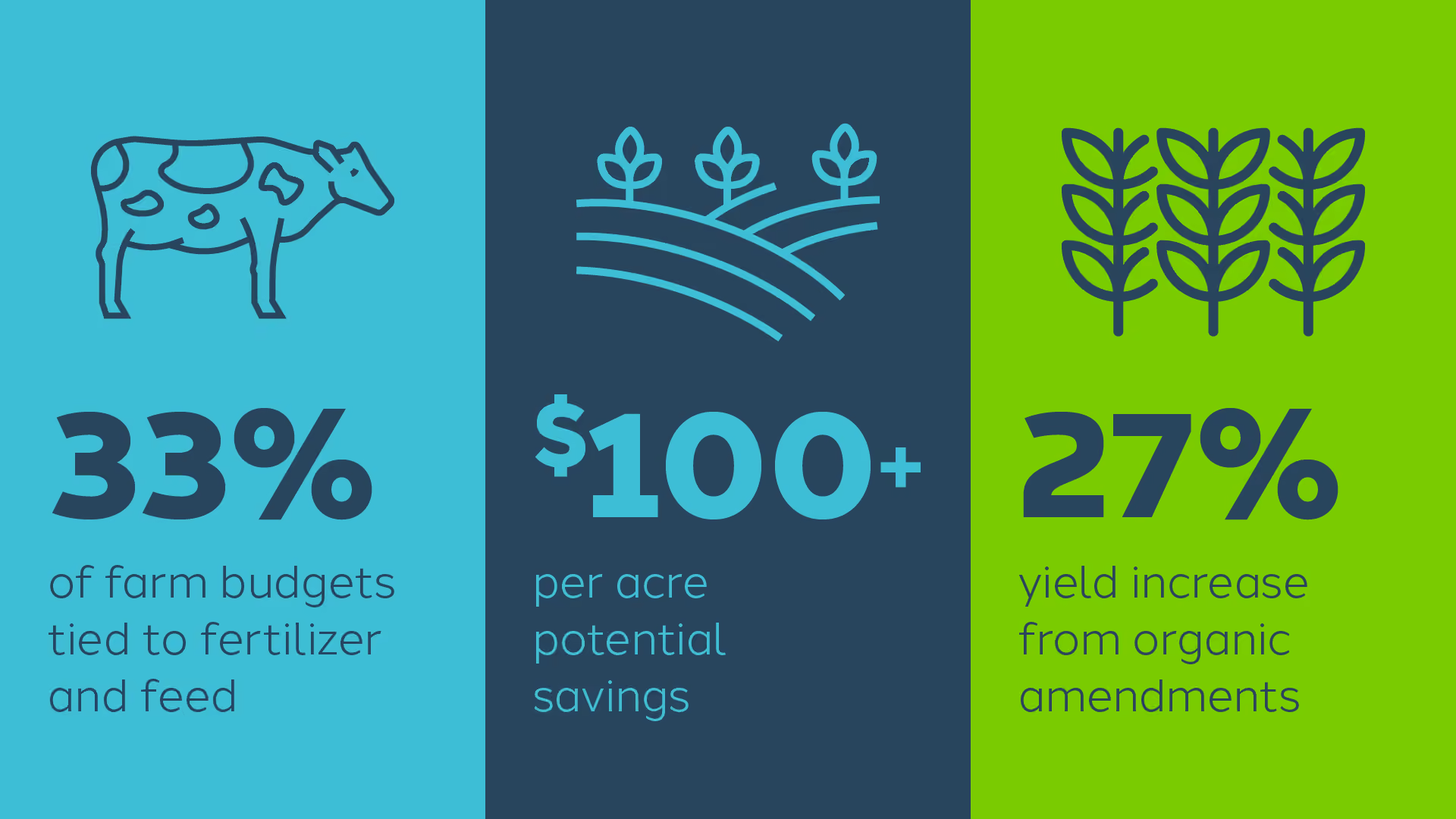
As mentioned before, recycling food produces valuable materials for farmers, such as compost, fertilizer, and animal feed. When farms partner with organizations like Denali, they get access to natural fertilizer at no cost. Fertilizers take up about 17.5% of a farmer's budget, while livestock food accounts for 15.5%. By participating in food recycling , farmers can reallocate 33% of their budget to other parts of their business, saving them at least $100 per acre.
The use of soil amendments can also boost crop yield. A 2025 study found that the use of organics-based soil amendments can boost harvest by 27%. More crops mean a greater bounty for sale at the end of a season.
Soil performance
About 33% of the soil in the world is moderately or highly degraded due to a lack of nutrients. Farmers often turn to synthetic fertilizers to fix the problem, but these types of fertilizers are like an energy drink for plants — fast but short-lived. Natural fertilizer is a balanced meal that nourishes the soil and supports steady growth.
Natural compost and fertilizer reintroduces essential nutrients to the soil, including micronutrients like nitrogen, phosphorus, and potassium, which are naturally occurring in unused food used to create soil amendments. These regenerative byproducts support the long-term fertility of the soil, which means over time, farmers don’t have to invest resources and time to optimize their soil.
.avif)
Operational stability
The resources produced by recycled food help farmers manage certain risks. With unpredictable weather patterns, protecting against events like drought is essential. One proven solution is incorporating compost into your soil. Compost doesn’t just enrich the soil, it transforms it. By reducing bulk density, compost improves the soil’s ability to absorb and retain moisture. This means crops grown in compost-amended soil require significantly less water to thrive, making your farm more resilient and sustainable.
Recycled food also ensures a reliable supply of agricultural staples: animal feed, compost, fertilizer, and soil amendments, as the following video illustrates:
The system is circular, meaning that when executed correctly, the resources are infinite. There will always be local businesses that have unconsumable food to be recycled. Rather than relying on external supply chains, food recycling enables farms to source from their surrounding communities through a mutually beneficial system. In the short term, this is a welcome convenience for farmers. In the long term, food recycling offers a secure pipeline of valuable materials that help agriculture thrive.
How to benefit from recycled food
At this point, you can probably see why using renewable products made from recycled food is a no-brainer for farmers.
The better alternative is to find a local partner who can help you access the benefits of this regenerative system — ideally, one with a network already established in your area. Denali, for example, operates in 48 states, plus Puerto Rico.
Once you have a good food recycling partner, talk with them at length about your needs and how your farm runs. Together, you should be able to come up with a tailor-made plan to get your farm the regenerative resources it needs to succeed.
From food recycling to farm
The shift from relying on expensive, synthetic soil amendments to zero-cost natural fertilizer has never been easy. With the help of Denali, you can start making the transition to a more profitable, healthy, and sustainable farm. Not only will you save money, but you’ll improve the soil, your crops, and water management.
If you’re interested in receiving fertilizer from Denali, contact us today. Check out all of our natural fertilizer and compost options to begin reaping the benefits of recycled food on your farm.

Learn more about Denali’s services
Join thousands of businesses turning unsold food and organic waste into valuable new products. Partner with Denali for reliable service—and drive meaningful, sustainable impact.