On Super Bowl weekend, Phoenix will divert 2,000 tons of food waste. Here’s how



Arizona’s capital expects fans to generate tons of food and packaging waste—and that’s not even at the game itself.
More than a million fans will descend on Phoenix this weekend for Super Bowl LVII and all of its accompanying events. While they get ready to cheer on the Eagles or the Chiefs, they’ll contribute to an estimated 2,000 tons of food and waste packaging from all the concerts, food festivals, and contests they attend around the city.
Knowing this, the city is working with Denali, a company that diverts organic waste from landfills. It will use its new “depackaging” technology to capture that organic waste and produce compost that can be applied to the dry Arizona soil. It’s the company’s biggest deployment of the tech so far, and it will help the city achieve its goal of making the Super Bowl and its ancillary events zero waste.
There will be plenty of sources of that waste. The Phoenix Convention Center is holding the Super Bowl Experience, a five-day party expected to attract 180,000 visitors. Described by the NFL as an “interactive theme park,” it will give guests a sneak peek of the Vince Lombardi Trophy and let them compete in games like the 40-yard dash and a combine obstacle course. Food concessions will be served throughout.
Rihanna is headlining the Super Bowl halftime show, but the city is hosting a music festival earlier in the weekend with performances by Paramore and Imagine Dragons. Meanwhile, the Taste of the NFL food event will feature celebrity chefs such as Andrew Zimmern and Carla Hall serving up dishes like root-beer-glazed wings, crab and artichoke dip, and sweet-and-sour meatballs.
Denali, which has been around for more than 20 years, works to transform food waste into valuable substances; it has converted bakery scraps into resources like cattle feed, and other scraps into nutrients to revitalize vegetation on old strip-mining sites. In 2021, it managed 600,000 tons of organic waste, working with Fortune 500 companies and local governments from Staten Island to Phoenix.
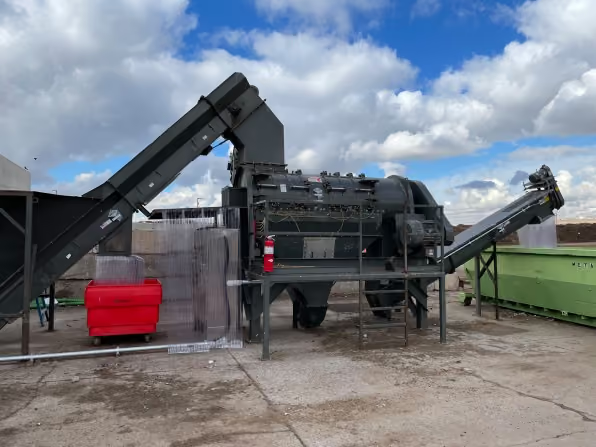
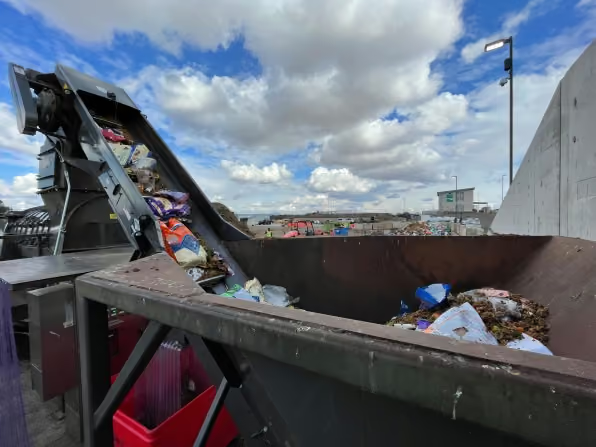
Denali has worked with Phoenix for six years, separating the city’s food waste from packaging trash and turning the organic material into compost. The infrastructure is already in place, with a composting facility in the city that was equipped this year with a 30-foot-long turbo waste separator (or “depackaging” tool).
Sam Liebl, Denali’s director of sustainability and communication, adds, “Attendees should toss as many chicken wings and hot dogs as they’d like into the compost bins.”
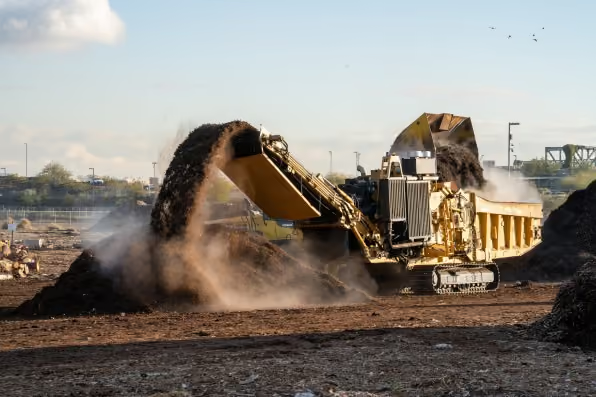
Packaging materials enter another compartment, are separated, and then sent to one of the city’s facilities for processing. Rodriguez estimates that as much as 97% of the trash will be separated successfully.Once cleaned, the food waste is added to other green waste, like grass and leaves, eventually forming compost. “Before we had this technology, there wasn’t a whole lot we could do with it,” Liebl says. “But now we’re able to come up with a clean stream of organic material.”
Along with the city’s other partners, like Direct Pack, which will handle recyclable bottles and cans, Denali’s operations will form a huge part of making this the greenest Super Bowl to date. Phoenix’s aim is to divert 92% of its waste, which will qualify as “zero waste” under the Environmental Protection Agency’s definition. NFL Green, the league’s environmental program, is helping edge toward that goal by eliminating certain single-use plastics and by donating uneaten food to local food rescue organizations.
Notably, the game itself will be played at the State Farm Stadium in Glendale, a Phoenix suburb with a separate waste infrastructure. NFL Green’s director, Jack Groh, explains that Glendale doesn’t have commercial composting, so if fans mix in their various trash items with food scraps instead of separating them, local recycling companies will consider the waste streams contaminated and likely send them to landfills.To mitigate that, crews will scour the entire stadium for trash after the game, and hand-separate recyclables from nonrecyclables. Food scraps will be donated to a local farm for animal feed. “It’s a simple, low-tech strategy, but it works extremely well for producing a clean stream of recyclables,” Groh says.
Back in 2018, Minneapolis successfully hosted a zero-waste Super Bowl, diverting 91% of the 69 tons of trash generated on game day. Incidentally, that Super Bowl was the last time the Eagles competed at the big game—and they won.

Learn more about Denali’s services
Join thousands of businesses turning unsold food and organic waste into valuable new products. Partner with Denali for reliable service—and drive meaningful, sustainable impact.