Training That Sticks: How to Drive Store- and Facility-Level Adoption



Key takeaways:
- High turnover and competing workloads are the biggest threats to consistent adoption
- Training works best when it reflects your specific environment, not generic best practices
- Center training around existing daily workflows — not the other way around
- Identify internal champions to reinforce protocols beyond day one
- Revisit and update training as operations change
Staff training is an essential and crucial part of implementing a successful food recycling program. You can have every C-level executive on board, but if employees are not invested or properly trained, the entire operation can fall apart.
The key is to get ahead of this pitfall before adoption has a chance to unravel. One of the best ways to do this is with focused employee training designed for both their needs and your company’s unique internal processes. This post will highlight the challenges to watch for, and show how focusing on the human side of training and workflows that fit your company can lead to success.
Ready to start? Get support rolling out your program.
Challenges for internal food recycling training
There are practical considerations that come up when training employees in food recycling.
High turnover disrupts consistency
Turnover can be high in food-related businesses, including both restaurants and grocery operations. Among restaurant operators alone, 77% say employee retention is a significant challenge. High turnover often means valuable training knowledge is lost, requiring teams to spend additional time onboarding new staff. This makes it harder to build long-term consistency and maintain a steady rhythm of implementation.
Competing priorities crowd out new processes
It’s also important to take employee workloads into account. In many cases, it’s not that staff are unwilling to support food recycling programs; it’s that their days are already full. Competing priorities are part of daily operations. A delivery arrives, a system needs attention, shelves need restocking, or service volume increases unexpectedly.
These realities can make it difficult for even well-intentioned teams to consistently focus on new processes. Employees are balancing multiple responsibilities at once, and adding a new initiative requires thoughtful integration into existing workflows.
For these reasons, food recycling training works best when it is tailored to the specific environment. What supports employee adoption in one restaurant or grocery setting may not translate directly to another. Rather than relying solely on generalized best practices, companies can achieve stronger results by designing training programs that reflect their teams, their pace, and their operational realities.
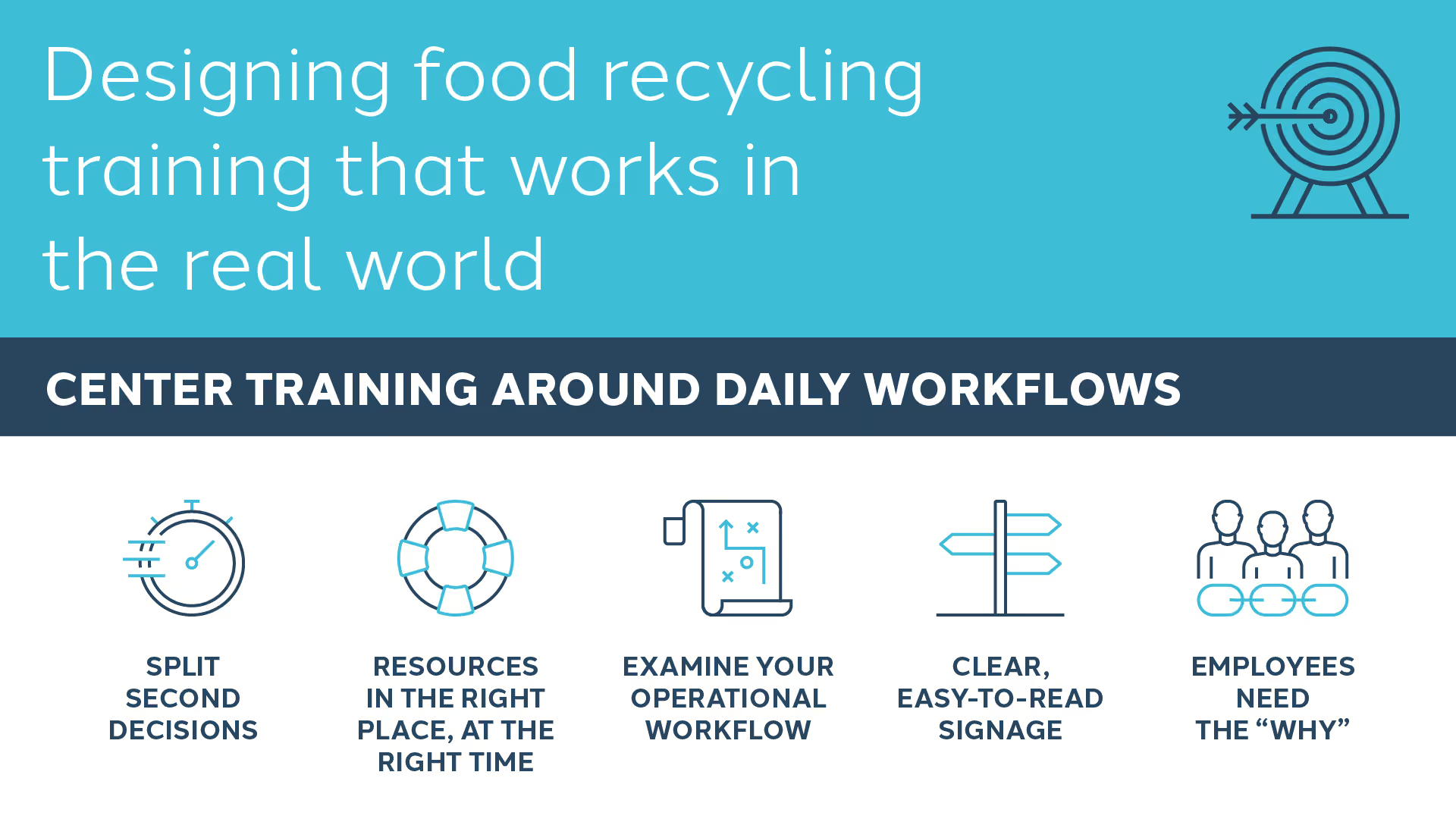
Designing food recycling training that works in the real world
Center training around daily workflows
The best way to address challenges like turnover, workload, and competing priorities is to step into your employees’ day-to-day reality.
Split-second decisions
If it takes employees more than three seconds to think about where food for recycling goes — or if they have to cross the kitchen or break their workflow
— food recycling then becomes optional. Efficient programs with training provide that “easy button” they need for operational realities. Simplicity and speed create consistency.
Resources in the right place, at the right time
When the work pace picks up, no one will walk across the kitchen to toss a handful of food scraps. That’s why a program like Denali’s works so well — in restaurants we place small, designated food-waste containers right where the waste actually happens — not down the line, not behind another station. Keeping a container within arm’s reach turns recycling into an automatic choice because it’s the quickest, easiest move in that hectic moment.
Examine your operational workflow
Where are the places in-store and in your restaurant where you have the most food that can be processed for recycling? Well-placed, designated containers in these key locations keep staff from defaulting to the trash. At grocery stores, it’s also important to have the right tools to fit your operational workflow — bins sized correctly are critically important. Employee participation increases significantly when everything needed is part of their work process.
Clear, easy-to-read signage
Displaying a sign showing acceptable and unacceptable food recycling items keeps things easy and convenient. This connection improves accountability.
Employees need the “why”
To get buy-in and commitment, it’s important for employees to understand why you have a food recycling program, where the material goes and how it’s repurposed. Sharing the environmental benefits with the team boosts employee morale because they are part of a solution.
Reinforce beyond day one
Onboarding is not enough to keep a food recycling program going. Continued reinforcement is important.
To build that momentum, tap into the people your team already trusts:
- Identify respected employees to champion food recycling protocols
- Use them to model expected behaviors and normalize participation
- Provide ongoing feedback loops between staff and management
Initial training is important for a solid foundation, but the trick is to continue building on that. Here are ways to keep the momentum going for an effective food recycling program:
Breakroom touchpoints
Use a short video refresher that includes a message about the positive environmental impact employees are making.
Signage in the right places
Reminders at key areas as mentioned above, back-of-house areas including where waste containers are stored, or prep stations in restaurants.
Quick program reminder
Start employee shifts with a 10-second reminder of recycling unused food.
Gamify it
Start a competition between shifts or departments.
Regular pulse checks
What’s working and what’s not; make adjustments as needed.
Adapt training as operations change
Food recycling training should evolve alongside your business. As staffing models shift, store layouts change, service volumes fluctuate, or new equipment is introduced, training must reflect those realities. Regularly reviewing and updating processes ensures guidance stays aligned with what teams are actually doing in stores and facilities.
Training that fits and sticks
Sustained momentum depends on internal champions and ongoing refinement shaped by employee feedback. When training evolves alongside operations, food recycling becomes part of standard practice rather than a temporary initiative.
Simplicity
Denali sees the most successful food recycling programs are built around simplicity and consistency. We find that when employees can make quick, confident decisions without slowing down, participation becomes second nature.
Eliminating contamination
In our experience, confusion and shortcuts lead to contamination of recycled food. These can be easily fixed with signage and training.
Training designed for busy employees
Having quick, accessible virtual training helps reinforce expectations, and supports ongoing education — especially with high employee turnover. Make sure your food recycling partner provides these important assets.
Contact us to learn more about how we support food recycling programs.

Learn more about Denali’s services
Join thousands of businesses turning unsold food and organic waste into valuable new products. Partner with Denali for reliable service—and drive meaningful, sustainable impact.