Retailers and circularity: how retailers can close the food waste loop

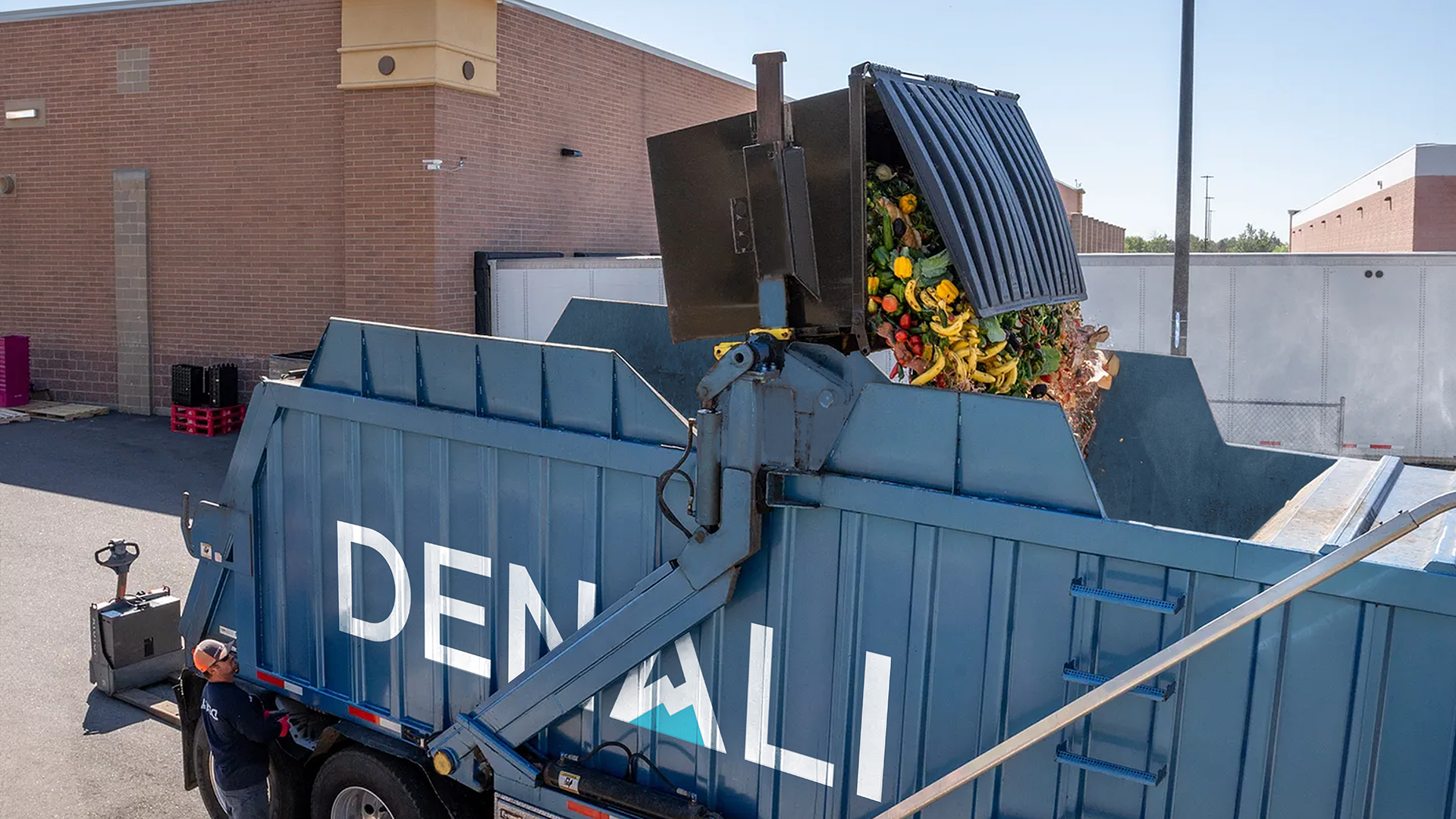

The circular economy presents a clear financial opportunity for grocery and garden stores. Unconsumed food that once represented just disposal costs can be recovered, reused, and returned to shelves as sustainable finished products, reducing disposal expenses while creating new sources of value and revenue.
Capturing that value depends on how retailers approach the collection of unconsumed food, the technologies that support food recovery, and the way this sustainable story is communicated to consumers.
How retailers capture value through circular systems
Grocery and garden retailers manage a high volume of organics-based products, including unused food, plants, and soil. Many of these materials are perishable or removed from sale due to damage, quality standards, or supply chain disruptions. Some of this food is safe for donation, and many stores contribute this valuable commodity back into the community. Historically, these materials moved directly to disposal.
Today, those same materials can be recycled into compost, natural fertilizer, and animal feed through circular systems that keep value in motion. As landfill costs continue to rise, converting unusable food and other organic material into beneficial reuse products offers a cost-competitive alternative that supports local agriculture while strengthening retail economics.
Retailers: an essential link in a circular economy
After reducing waste as much as possible, retailers can be a crucial link to a more circular economy. Converting unsellable food and plants into valuable products is inherently circular and the lowest-hanging fruit in the circular economy challenge. Turning that opportunity into consistent value requires focus in a few key areas.
Logistics
Retail and food services combined account for over 23% of the surplus food generated in the U.S. Yet, entering the food recycling system can be challenging for retailers. The sprawling size of many U.S. cities does no favors for recycling logistics. Stores may be many miles apart, while sites like compost facilities are often well outside of the urban core due to land prices and permit requirements. As such, the costs of transporting damaged products, expired goods, or recalled food products from retailers to organics processing facilities can quickly add up. The network of a partner for efficiently moving materials is a particularly important consideration for maximizing value.
It’s important to partner with a recycling provider that can customize its services to the retailer's needs. This means accommodating varying volumes of organic byproducts caused by seasonality and product flow. The importance of working with a recycling partner that has the mechanisms to convert those unsellable organics into products such as compost, fertilizer, and animal feed that can benefit farms and our planet.
Technology
There have been major advancements in organics recycling technology over the last decade. Material recovery facilities (MRFs) now deploy sensors, robotics, and artificial intelligence to sort recyclable materials. For unconsumable foods, depackaging machines that can efficiently separate packaging from contents, as well as improved composting processes, have made food recycling more efficient and circularity more attainable.
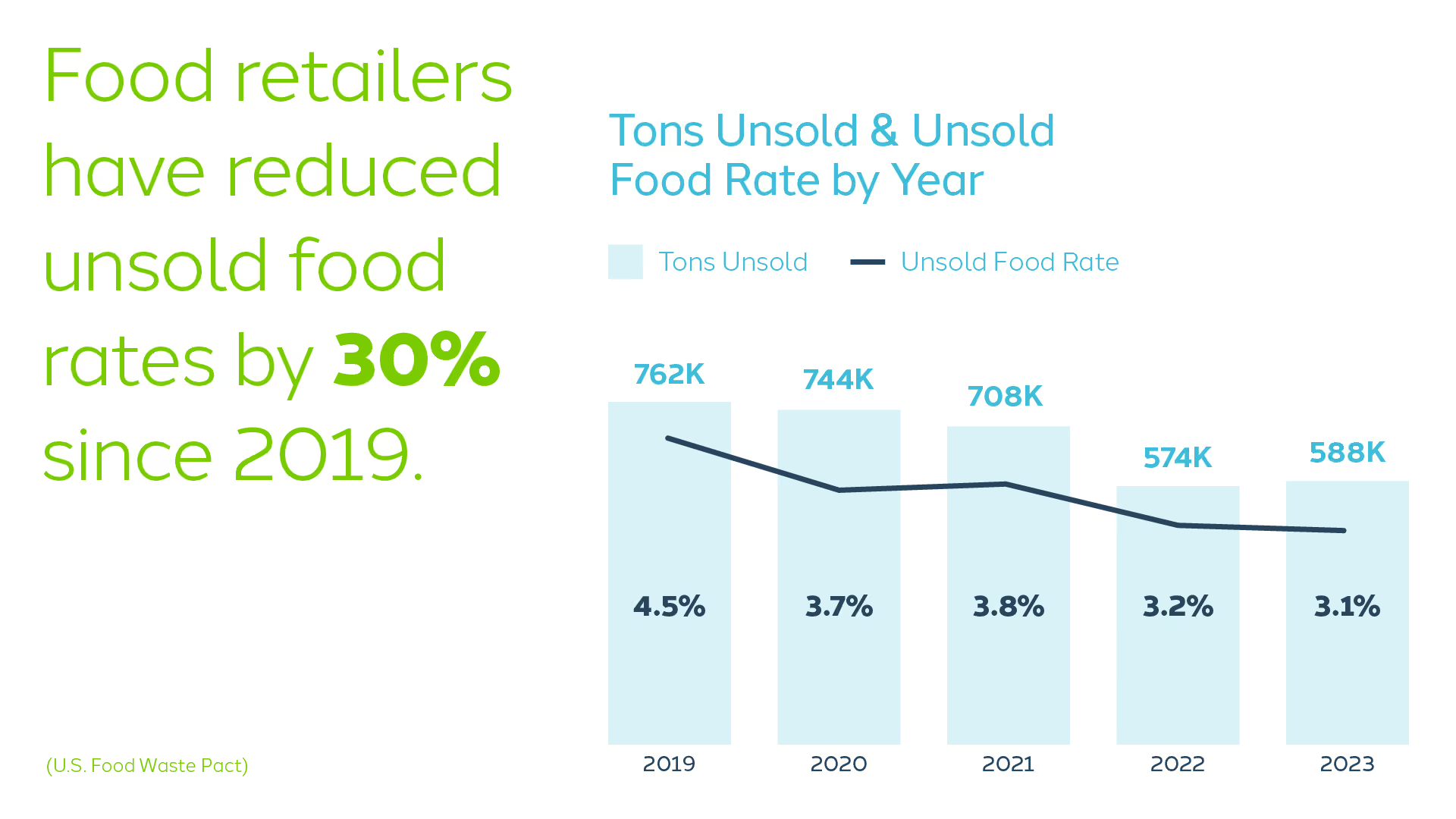
These advancements in food recycling technology are already having an impact. The U.S. Food Waste Pact recently reported that food retailers on just the West Coast have reduced unsold food rates by 30% since 2019. Rather than going to a landfill, almost 40% of organic materials are being repurposed into agricultural products like animal feed, compost, natural fertilizer, and used cooking oil from commercial kitchens can be captured and transformed into biofuel.
Voluntary commitments by businesses, including the largest retailers, to achieve zero waste through reduction, donation/reuse, and recycling have enabled the organics infrastructure to expand throughout the U.S. Additionally, food waste recycling mandates have prompted a build-out in organics recycling facilities and upgrades in technologies. There have never been so many options for and awareness of organics recycling as there is now. The U.S. Composting Council (USCC) reported that the sheer amount of organics being repurposed into compost increased by 16% between 2021 and 2023 alone.
Mechanical depackaging machines have been a breakthrough for food recycling, enabling items like food in plastic containers, soil in bags, and canned beverages to be recycled rather than sent to landfills because of their packaging.
The design of these devices varies, but all involve processes that open packaging without breaking it into many pieces. Then, the organic contents are captured to separate them from the packaging. Two distinct material streams then exit depackaging machines: organics that can be turned into compost, animal feed, renewable energy, and other valuable products; and the packaging, which in some cases can also be recycled. Talk about a win.
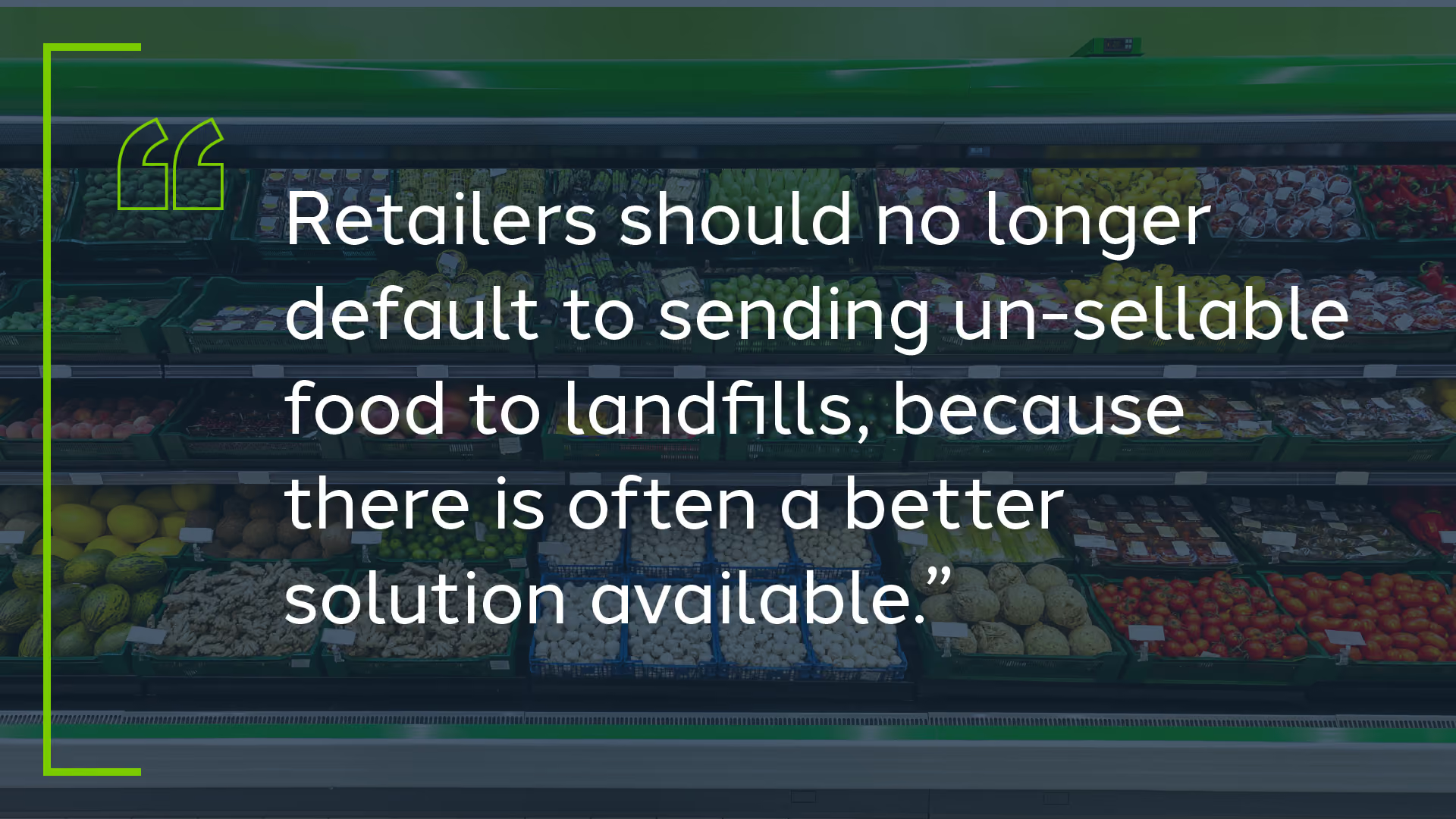
Whether it’s food or garden products, organic waste from retailers has value. Packaging is no longer a barrier to putting this value to good use. Retailers should no longer default to sending unsellable food and other organic products to landfills, because there is a better solution available thanks to new technologies.
Positive message to customers
Customers are keenly aware of greenwashing, which is defined as overstating the sustainability or environmental benefits of products and services. But there is still demand for green products and sustainable approaches by businesses. The key is to communicate credibly about the food waste solutions being deployed and the degree of circularity achieved.
Data is the foundation of credibility The common saying, “You can’t manage what you don’t measure” holds true for retailers. Credible data relies on investment in processes, systems, technology, and people. For organics landfill diversion, for instance, data should answer questions such as how much volume was generated; how much was reduced, reused, or donated; what volume was recycled; and what methods were used for recycling.
Data related to circularity on the product side requires additional tracking and insight, while educational messaging and environmental certifications can be valuable to connect with the consumer. But the effort is worth it, especially when 80% of consumers say they are more likely to trust a company when they are able to back up their sustainability claims with data.
At the end of the day, reducing impact on the environment is one factor that drives consumer behavior, but we cannot ignore that price and quality are important, too. Data can help with this, as well, and it is important to note that a circular product can be cost-competitive, and equal-to-better quality than its non-circular counterpart.
From unused food to farm
When retailers adopt food recycling systems, they have a direct impact on the places where grocers source from the most: farms. Rather than being sent to a landfill, unconsumable food is diverted to facilities where it can be transformed into useful materials, many of which support healthy agriculture.
The process begins at the retailer. In supermarkets, employees simply remove damaged or expired food from the shelves and transfer it to recycling containers for pickup.
Through recycling systems enabled by partners like Denali, the recovered food is mechanically depackaged and processed so it can move back into productive use as compost, natural fertilizer, and feed for livestock.
Thanks to local food recycling, farmers have the building blocks to create healthy soil for robust crops, or to feed their animals organic materials that may have very well come from their own farm. When engaged in circularity, both agricultural institutions and organics retailers are constantly replenishing each other. It’s an infinite loop that forever intertwines these industries for the better.
Why it pays for retailers to go circular
Through Denali’s ReCirculate™ compost, retailers can turn previously unconsumable food into finished compost products that return to the store as a sellable good. Food surplus is composted, refined, and bagged for retail sale allowing grocers to recover value from materials that would otherwise represent a disposal cost while supporting local farms.
Altogether, logistics, technology, and messaging contribute to a new reality in which retailers can turn their unsellable organics into an asset. A dumpster should not be the first choice, or the end of the story. Unsellable goods can often stay in the economy, completing the cycle from manufacturer to retailer to consumer once again — for the benefit of businesses and the planet.
Learn more about how Denali helps the largest retailers in the U.S. embrace circularity.
Contact us to learn more about how Denali can partner with your business to help achieve sustainability goals while bringing operational efficiencies and potential profit.

Learn more about Denali’s services
Join thousands of businesses turning unsold food and organic waste into valuable new products. Partner with Denali for reliable service—and drive meaningful, sustainable impact.