How to Dispose Farm Waste: Recapturing Potential

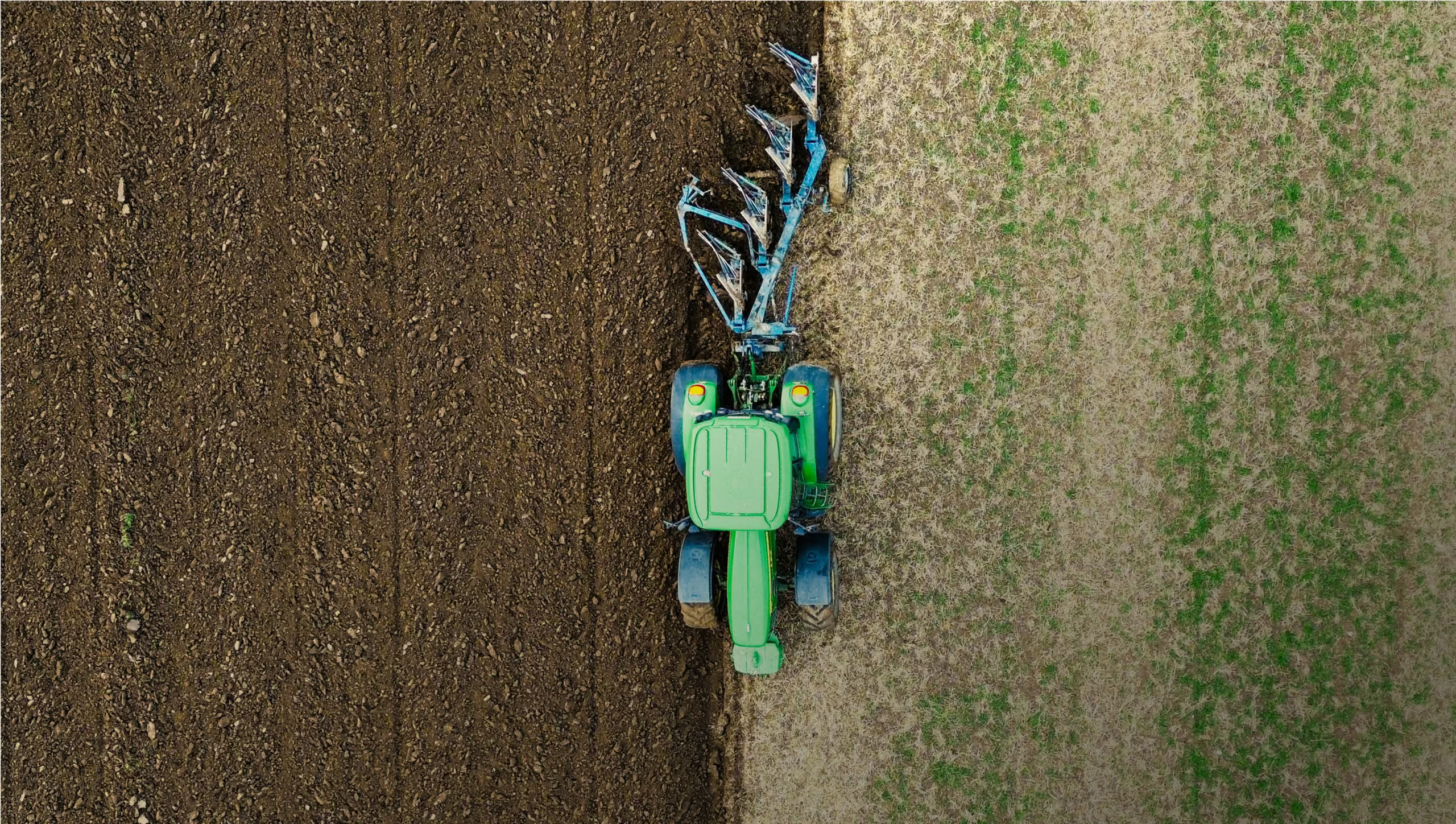

Waste should not be wasted. Crop residue, manure, food processing byproducts, and unsold produce are more than waste. They’re valuable organic materials that have untapped resources.When managed properly, these byproducts are recaptured and transformed into resources that feed back into the land, creating healthy soil and a sustainable farming process. This contributes to the circular economy, a sustainability model where resources are recaptured after use to be transformed into new resources.
What Makes a Good Farm Waste Recycling Plan?
A farm waste recapturing plan will not just consider how to get rid of farm waste, but most importantly, how to reuse farm waste. A proper plan should:
- Keep organic materials out of landfills
- Reduce costs
- Transform materials into tomorrow’s agricultural resources
Denali offers farms customizable agricultural waste programs that are aligned with every farm’s operational needs. It doesn’t matter what size your farm is; you can contribute to the circular economy and help create a more sustainable tomorrow.
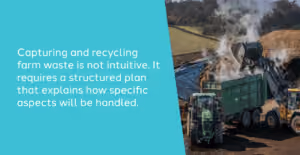
Eco-Friendly Food Waste Recycling Services
Food loss is a problem throughout the entire supply chain. Not only is food wasted at the grocery and consumer level, but at the farm level as well. From overripe fruit to “cosmetically challenged” produce, farms end up having to dump a lot of valuable material into the dumpster. Wholesalers are picky and often don’t want to purchase produce that is considered to be “second pick”. Instead of sending unsold food to be wasted, these resources should be sent to be recycled for any available nutrients and returned to the soil.
Composting
Composting is at the heart of most waste recapturing plans, and it’s at the heart of Denali’s process. Applying compost to farmland feeds soil microorganisms, improves soil structure, and boosts soil fertility.Healthy, “alive” soil is especially important for breaking down crop residuals. Farmers can till crop stalks and straw back into the soil, but compost and fertilizers provide the microbial life needed for those materials to decompose effectively and return nutrients to future crops.
Why Is It Important to Recapture Farm Waste?
The importance of agricultural waste management can not be overstated. When organic leftovers go to waste, they’re not being used to their fullest potential. Both the farm and the environment can gain from recapturing unused organic material.When materials are recaptured and recycled, farmers can:
- Strengthen soil fertility and health
- Reduce dependence on synthetic-only inputs
- Lower greenhouse gas emissions by diverting material from landfills
- Contribute to a circular agricultural economy
Circular Economy
The circular economy is an economic model built on the principle of repurposing materials to create new value and opportunity. Instead of the traditional “take, make, dispose” model, circularity emphasizes:
- Using materials for as long as possible & to their highest value
- Extracting maximum value before disposal
- Recovering and regenerating resources at the end of their life cycle
Farms can contribute to the circular economy with crop residuals, manure, and processing byproducts. These byproducts can be transformed into compost and fertilizers that feed the soil and close the loop in the circular economy.
Tips For Farm Waste Management
- Think of your waste as a resource: Shift your mindset to see crop residues and manure as inputs for future productivity.
- Partner with an expert:. Companies like Denali provide reliable collection, composting, and biosolids management services.
- Feed your soil: Apply compost and fertilizers to keep soil “alive” with the microorganisms needed for healthy decomposition and nutrient cycling.
- Track what works: Monitor soil health and crop performance after implementing recycling practices.
Agricultural Waste Disposal Methods
Farms can manage their organic byproduct in several ways. Some farms can handle their waste on site, while others are best managed through a trusted recycling partner.
Partner With Denali
No matter the size of your farm, Denali can handle your organic waste recycling. We handle everything from collection, transformation, and distribution. Tapping into Denali’s agricultural waste management means providing important residuals for compost development.Contact Denali to learn more about how your farm can benefit from full-service farm waste services.
Do It Yourself
If you have enough help, it is possible to do this on your own. However, it does require quite a bit of work. Including:
- Specialized equipment like an anaerobic digestion system and large composting bins or fields
- Transportation methods
- Extra labor
The benefit of handling your own compost production is keeping your resources close. However, not every farm will have the help, time, and resources to handle it internally.
Types of Agricultural Waste Management
Now that we know how to manage farm byproducts, let's look at the main categories of residuals that should be managed.
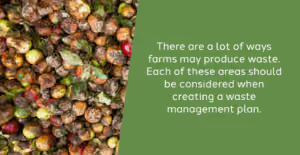
Food Processing Residuals
Materials like pulp, vegetable trimmings, and peels can (and should) be repurposed as part of a composting plan. Denali’s collection and processing services ensure these nutrients are reintegrated into farmland instead of being discarded.
Manure
Animal manure is rich in nutrients but requires careful handling. Denali helps recycle manure into safe, effective soil amendments, reducing odor and runoff risks while improving soil fertility.
Crop Residuals
Crop residues like stalks, straws, husks, and leaves are often forgotten and left behind. Farmers can till these into the soil, but without healthy microbial activity, they’ll decompose slowly.Denali’s agriculture waste recycling services provide farms with quality collection and products that feed microorganisms to accelerate healthy crop development.
Spoiled and Discarded Produce
The grocery industry demands only the best-looking produce, which means some crops never make it to market. Instead of being wasted, these fruits and vegetables can be recycled through Denali into compost or other soil amendments—ensuring the nutrients return to the farm.
Recapture Your Farm's Potential With Denali’s Agriculture Services
Farm “waste” isn’t really waste — it’s potential. With the right plan, byproducts like crop residues, manure, and food processing residuals can be transformed into valuable resources that fuel future harvests.Denali partners with farmers to close the loop, offering services that turn today’s organic materials into tomorrow’s fertile soil. Together, we can build healthier soils, stronger farms, and a more sustainable future.

Learn more about Denali’s services
Join thousands of businesses turning unsold food and organic waste into valuable new products. Partner with Denali for reliable service—and drive meaningful, sustainable impact.