Food Processing Residuals: The fertilizer that synthetic inputs can't match on price


Key Takeaways:
- Food processing residuals (FPRs) are a nutrient-rich organics fertilizer recovered from food-safe processing facilities across the country
- As a byproduct of the nation’s food production, FPRs are a consistently available nutrient source for farmers.
- FPRs help build long-term soil health and improve water retention through the addition of organic matter. Additionally, FPRs release nutrients gradually across the growing season
- FPRs can be compatible with no-till farming practices when applied via subsurface injection, which also reduces odor at the application site
- Annually, Denali provides FPR fertilizer, at no cost, to farmers across more than 100,000 acres of farmland, with documented savings averaging $250 per acre, including spreading costs
Food processing residuals are one of American agriculture's most under-utilized resources. Captured as a byproduct of food manufacturers, this nutrient-rich organic material has been returned to farmland as fertilizer for decades — building soil health, improving water retention, and supporting crop yields.
The synthetic fertilizer market has always been volatile: its supply and price are sensitive to changes in the energy markets, global trade flows, and inputs that farmers have no control over. That exposure has grown harder for farmers to absorb as prices have climbed and supply chains have proven unreliable.
FPRs offer a local, readily available, agronomically proven alternative, and deserve a closer look.
What's in food processing residuals?
Food processing residuals are generated at food processing facilities across the country every day, as a byproduct of food manufacturing at industrial scale.
Where FPRs come from
Food processing residuals are generated at all facilities that manufacture food as part of routine operations. The material is approximately 90% water combined with microscopic organic residuals including protein, fat, and other nutrients captured during rinsing and production.
How FPRs are captured: The Dissolved Air Flotation process
To separate this material from the water used in processing, many food manufacturers rely on a method called dissolved air flotation, or DAF. The process works by injecting tiny air bubbles into the wastewater stream, which bind to suspended organic particles and carry them to the surface to be skimmed off and collected. The remaining water is sent for further treatment and the organics collected by the DAF process are ready to be delivered to a local farmer.
This mostly liquid solution of organic material is rich in nitrogen and other macro- and micro-nutrients. Farmers have historically paid significant sums for similar synthetic inputs.
FPR as a soil amendment
Once captured, this material is hauled directly from the plant to the farmer, and no further processing is needed. Nutrients in FPRs are readily available to the plant immediately, and over time as the organic matter continues to break down in the soil. University of Georgia Cooperative Extension research classifies FPRs as an accepted soil amendment, recognizing their value in improving soil structure, building organic matter, and enriching the soil microbiome. Applied consistently, FPR delivers a range of agronomic benefits that compound over time.
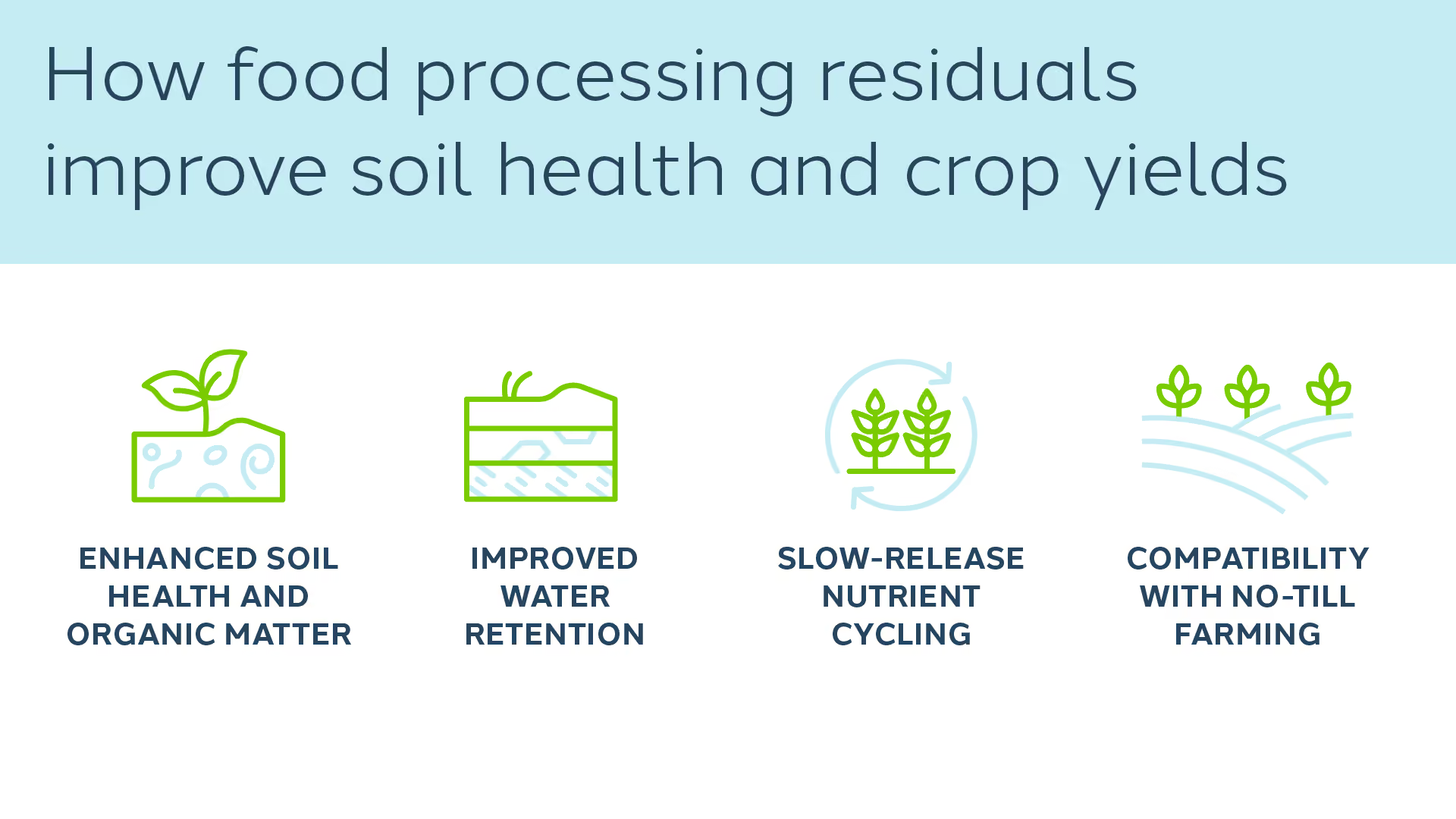
How food processing residuals improve soil health and crop yields
Enhanced soil health and organic matter
Through the addition of organic matter, FPRs build the kind of soil environment that holds moisture, reduces erosion, and increases the soil's long-term productive capacity. While FPRs have nutrients that are immediately available, microbes continue breaking down the organic matter over time, slowly releasing nutrients back into the soil in forms plants can use across multiple growing seasons.
Improved water retention
Organic matter acts like a sponge, absorbing water and slowly releasing the moisture during dry spells. As organic matter breaks down, it releases “sticky” byproducts that bind small soil particles together, creating microscopic pores. These micropores hold water and allow plant roots to reach nutrients more effectively. This is a significant advantage in regions that experience high heat or drought conditions.
Slow-release nutrient cycling
Unlike immediate release fertilizer, FPR releases nitrogen, phosphorus, and other nutrients gradually as the organic matter breaks down, supporting crop growth across the entire growing season, rather than delivering nutrients in a single application. Split application is not required, as FPR has nutrients immediately available to the plant plus the organic matter, slowly releasing nutrients throughout the growing cycle.
Compatibility with no-till farming
FPR can be applied via subsurface injection, making it adaptable to no-till conservation practices, hay-ground, and pasture, where other fertilizer types present logistical challenges.
This application method also addresses one of the more common questions about FPR land application. FPR carries an odor during the application process, which is a natural byproduct of active microbial activity as the organic matter breaks down and releases nutrients into the soil. Denali is able to apply FPRs below the soil surface, and stores the material in enclosed facilities, both of which reduce odor at the application site.
What drives synthetic fertilizer price volatility
Synthetic fertilizer pricing has never been fully stable. The inputs required to produce it are subject to forces largely outside a farmer's control:
- Natural gas, the primary input for nitrogen synthesis, fluctuates with energy markets
- Mined phosphate and potash depend on the availability and reliability of international supply chains
- Transportation disruptions affect delivery timing and cost at every stage of production and distribution
When any of those variables shift, farmers absorb the cost difference.
Prices have been climbing for several years, and farmers running on tight margins have limited options for managing that exposure. Locking in supply ahead of the season helps, but it requires capital. Substituting inputs mid-season is rarely practical. For most farmers, that volatility is simply a cost of doing business — one that has grown harder to plan around as price swings have become more frequent and less predictable.
Why food processing residuals are insulated from fertilizer market swings
Food processing residuals are produced domestically, recovered from food manufacturing facilities across the country, and distributed to farmers through complex transportation logistics, such as Denali’s nationwide distribution network. The supply is not tied to energy markets or international trade flows and is available regardless of what commodity markets are doing.
That distinction matters because the factors that drive synthetic fertilizer prices upward have no bearing on FPR supply. As long as food is being processed — which it is continuously to feed our communities — FPRs are being produced.
Denali has been collecting, storing, and land-applying food processing residuals for more than 40 years, building the infrastructure, compliance expertise and agricultural relationships required to operate at a national scale. That depth of operational history means farmers are tapping into a supply chain that has been running efficiently alongside conventional agriculture for decades.
What FPR costs farmers compared to synthetic fertilizer
Denali provides food processing residuals to farmers at no cost. The economics of that model are straightforward:
- Denali operates a national collection and distribution network spanning food processing facilities and farmland across the country.
- Large-scale distribution logistics mean delivery timing doesn't always align perfectly with a farmer's planting schedule.
- Providing the material at no cost offsets that inconvenience and gives farmers access to a high-performing fertilizer input with no procurement cost.
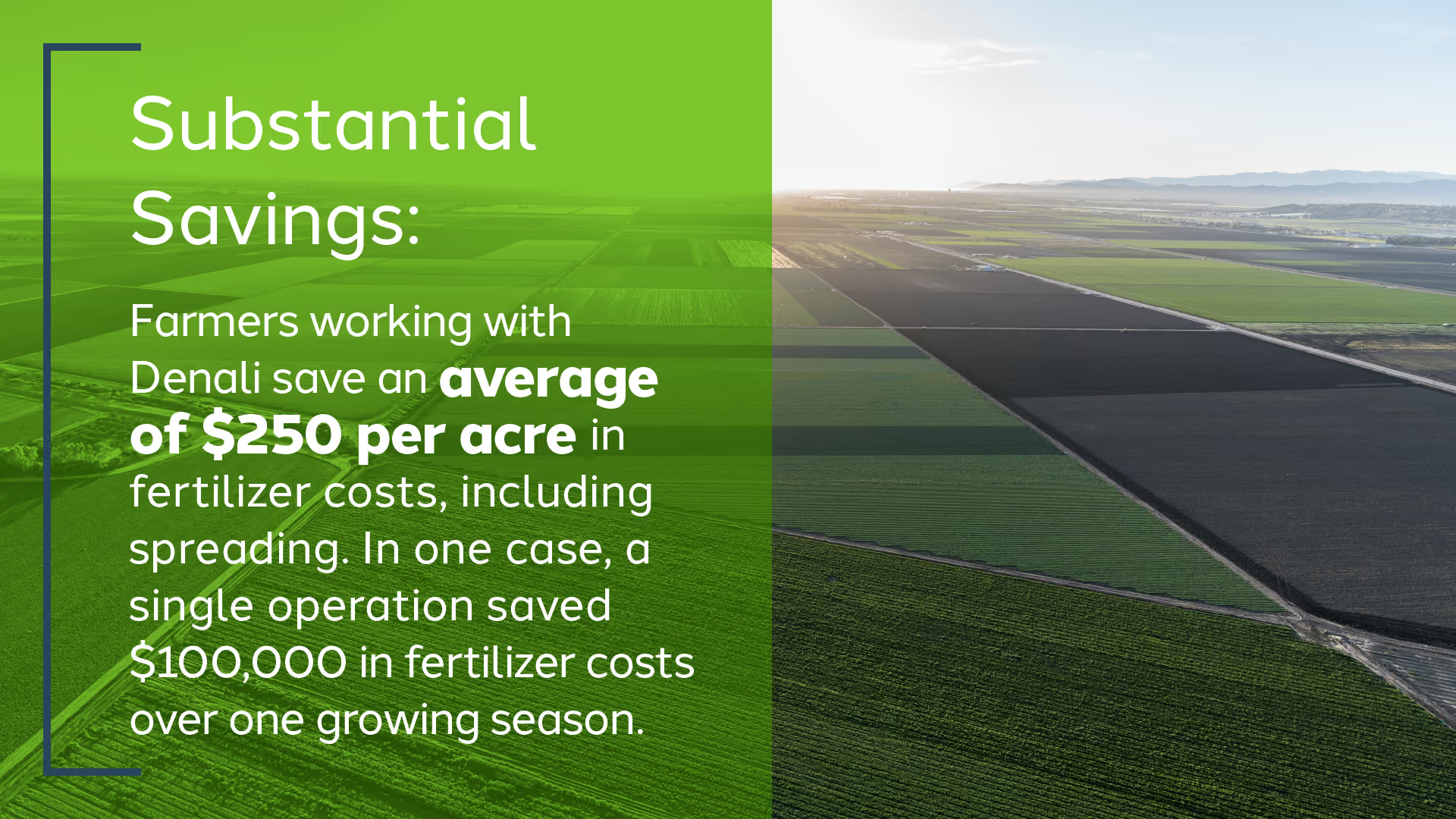
In 2024, Denali produced 9.6 billion pounds of natural fertilizer, providing direct agronomic benefit to more than 100,000 acres of farmland across the country. For farmers who have been absorbing synthetic fertilizer cost increases year over year, that represents a meaningful and reliable alternative with a track record behind it.
Getting started with Denali's natural fertilizer program
For farmers, the operational lift is minimal.
Denali's environmental experts test every FPR material to determine optimal nutrient application rates for the crops being grown, handling all federal and state permitting and reporting requirements. And Denali’s operational team works directly with each farmer to manage delivery and application logistics.
For food processors and manufacturers generating FPR material, partnering with Denali to close the loop on a byproduct that would otherwise be wasted by disposal, returning nutrients back to local farms, strengthening the longevity of our nation’s food system.
Food processing residuals have been working hard on American farmland for decades. For farmers navigating rising input costs and unreliable supply chains, they represent something increasingly rare: a high-performing agronomic input with a stable supply and a price point that doesn't move.
Denali's natural fertilizer program is available to agricultural operations across the country. Improve your bottom line with Denali's natural fertilizer program.

Learn more about Denali’s services
Join thousands of businesses turning unsold food and organic waste into valuable new products. Partner with Denali for reliable service—and drive meaningful, sustainable impact.