Who owns food recycling internally?



Key takeaways:
- Stalled food recycling programs are usually a structure problem, not a culture problem
- No single department can own a food recycling program alone — shared ownership is essential
- Start by mapping your full workflow and assigning a clear owner at each stage
- Use observable checkpoints, not formal KPIs, to track early progress
- Consistent communication keeps ownership from eroding over time
Many food recycling programs struggle for reasons that aren’t immediately obvious. When progress slows, it’s often attributed to low participation or lack of buy-in. More often, the issue is simpler (and more fixable) than that: unclear internal ownership.
When roles and responsibilities aren’t clearly defined, accountability gets diluted. Decisions stall, follow-through weakens, and even well-intentioned programs can lose momentum. This post focuses on how internal ownership breaks down, why it matters, and the practical steps organizations can take to bring clarity and keep food recycling programs moving forward.
Ready to start? Get help structuring your program.
The internal ownership challenge
No single department can run a food recycling program on its own. These programs typically span multiple functions, each touching a different part of the process. Sustainability teams often initiate and support food recycling efforts, but they don’t always own day-to-day execution. At the same time, operations and facilities teams manage critical workflows that directly affect how the program functions on the ground.
When these responsibilities aren’t clearly defined, ownership can fragment. Teams may assume another department is accountable for outcomes, leaving no one fully responsible for keeping the program on track. This lack of clarity is a common barrier to effective organics recycling and is frequently cited by organizations such as the United States Department of Agriculture (USDA) as a challenge to sustained success. The good news is that this breakdown is structural, not cultural. And it can be corrected with clearer role definition and coordination.
Ownership is a shared system
Effective food recycling programs rely on coordinated ownership across teams. The starting point is to clearly define the role each department plays at every stage of the process. This work is valuable whether a program is new or long established, because unclear handoffs and assumptions tend to compound over time.
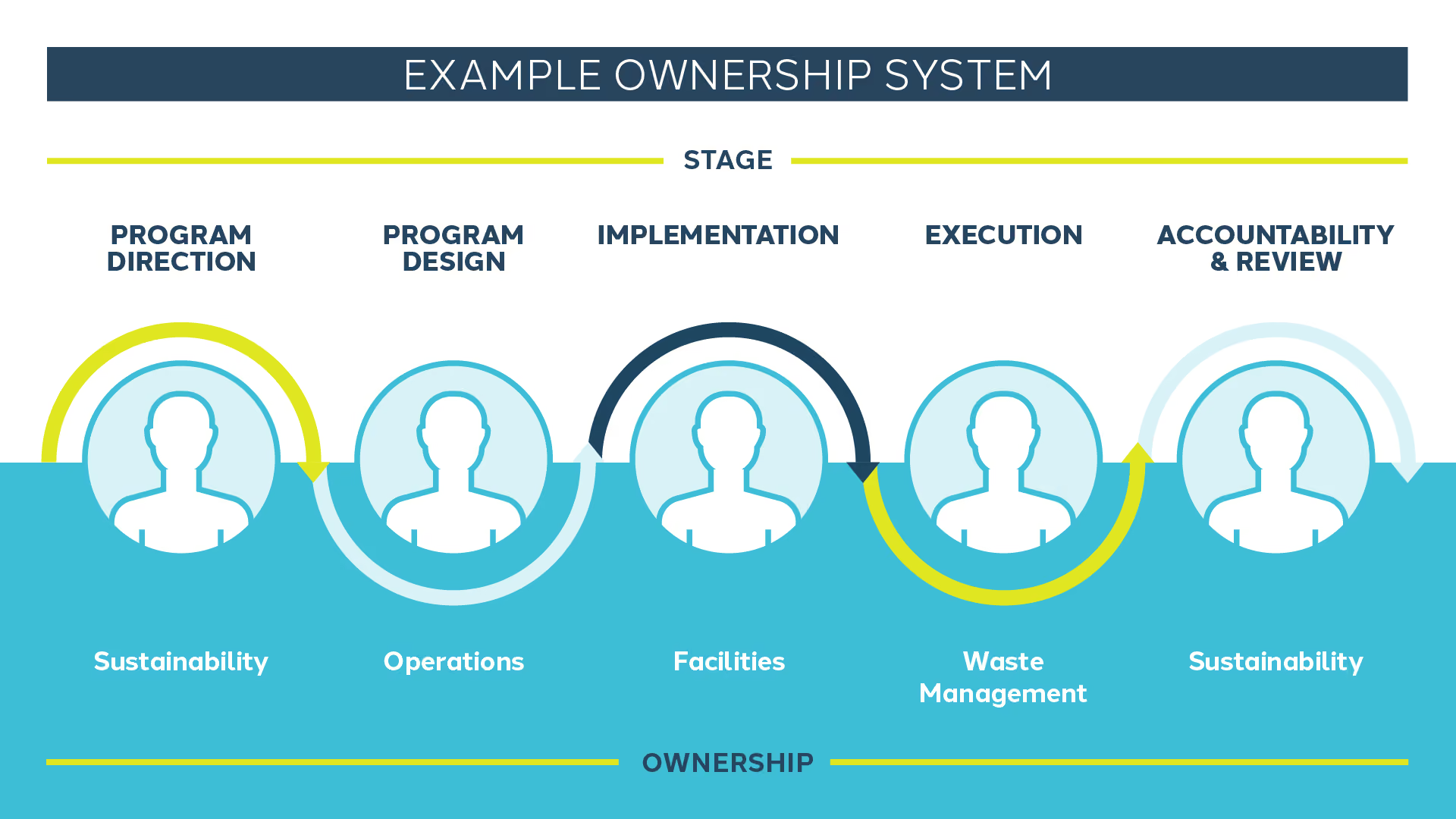
Ownership will vary by organization — what matters is that each stage has a clear owner.
Map the workflow before assigning roles
Start by mapping your full food recycling workflow, then assign clear ownership at each stage.
Corporate teams typically:
- Set strategy
- Establish standards
- Select partners.
Facilities, operations, and waste management teams handle daily execution. Defining where planning hands off to operations prevents gaps from forming.
From there, identify a specific accountable person within each team. These individuals serve as stewards for their department's role and act as consistent points of contact. Where possible, find champions — people who will actively keep the program on track.
With ownership in place, align on a set of early implementation milestones. These are practical, observable checkpoints — not formal KPIs — that confirm the program is taking hold on the ground:
Completing workflow assessments
- Have you mapped how food waste moves through each location?
- Are collection points placed where the work actually happens?
Confirming site-level readiness
- Is signage posted at every relevant station?
- Are bins and keys clearly labeled?
- Have all staff who touch the process received training?
Resolving contamination issues
- Does every employee know what can and can't go in the program?
- Is there a clearly posted process for what to do when something goes wrong — and does everyone know who to call?
Establishing support visibility
- Are customer service and account manager contact numbers posted and accessible?
- Is there a system to track questions or concerns and get answers back to staff quickly?
Shared visibility into these checkpoints allows teams to surface issues early and adjust before small problems become larger ones. When roles and accountability are clear, food recycling programs tend to move with greater speed and fewer friction points.
How to keep up communication
Clear ownership only works when it’s reinforced through consistent communication. Once roles are defined, teams need a reliable way to stay aligned as the program operates and evolves. Communication should focus on how the process is functioning, where handoffs are breaking down, and what needs attention before small issues slow progress.
- Process performance — Are all participating groups (deli, bakery, etc.) following protocols consistently?
- Handoff health — Are all groups across all shifts completing their part of the process?
- Contamination count — How often is contamination occurring, and is it trending in the right direction?
- Pounds collected — Is the volume of recycled material growing over time?
- Food-in-trash audits — Periodic checks on what's ending up in the garbage instead of being recycled
Regular check-ins create space to review progress, surface challenges and coordinate next steps across departments. Equally important is having a defined channel for flagging issues quickly — whether that's contamination concerns, workflow changes or site-level constraints.
What that looks like will vary by organization. Some teams already have established communication infrastructure they can plug into; others will need to create something new. The right fit depends on your team size, how distributed your locations are and what your staff actually uses day-to-day.
A few common approaches:
- A dedicated group chat or messaging thread (Teams, Slack, or a simple group text)
- A shared log or notes field within existing store management software
- A standing agenda item in regular shift or team meetings
- A posted contact sheet at each location so staff always know who to reach and how
The format matters less than the consistency. Used well, these touchpoints maintain accountability, support transparency and keep everyone working from the same understanding of how the program is performing.
Better together
Clear ownership gives food recycling programs the structure they need to hold up over time. When responsibilities are defined and understood across teams, programs are better equipped to adapt to changing conditions, address issues as they arise, and scale thoughtfully as needs evolve.
As your program continues to mature, having the right support in place can make that evolution easier. Denali works with organizations to bring operational clarity and practical guidance to food recycling efforts, helping teams design programs built for long-term success. Learn more about how we can help you establish an effective food recycling program, or contact us to get started today!

Learn more about Denali’s services
Join thousands of businesses turning unsold food and organic waste into valuable new products. Partner with Denali for reliable service—and drive meaningful, sustainable impact.