How to get started with a food recycling program

.jpeg)

Key Takeaways:
- Don't try to solve everything at once
- Start by assessing your organic materials before planning logistics
- Build a small cross-functional team with a single program champion
- Define scope before evaluating partners
- Uncertainty is normal and can be an asset — flexibility leads to stronger execution
Getting approval for a food recycling program at your company is a big win. Congratulations! Now the focus shifts to activation — moving from concept to action. If you are feeling a bit overwhelmed, you are not alone.
Most organizations don’t stall at this moment because they lack commitment; they stall because they try to solve everything at once. In reality, launching a food recycling program starts with a small set of early decisions that create clarity and make the rest of the planning more manageable.
This guide is here to help you navigate that transition and build a strong foundation for success. Ready to get started? Talk to a Food Recycling Expert.
How to get a food recycling program started
Getting a food recycling program off the ground involves a lot of moving parts. Breaking the process into clear phases makes it manageable.
Resist the urge to jump ahead
Early planning conversations often start with topics like storage containers, pickup logistics, or potential partners. These considerations matter, but do not need to be resolved on day one.
Focusing on them too much, too early can pull attention away from more productive work: aligning stakeholders, defining scope, and assessing organizational readiness. By grounding the program in the following fundamentals first, your teams are better positioned to make the right decisions as the operational details come into view.
Know your inputs before you plan outputs
Before you begin examining the logistics of launching a food recycling program, you must first assess what organic materials your business is working with:
- How much of your food surplus is unavoidable — scraps, peels, byproducts that can't be repurposed?
- How much could be donated before it becomes waste? (Start with your trash: how much edible food is going in?)
- Where is the surplus coming from, and how is it currently stored?
- Are there existing systems for excess food that could help or complicate recycling efforts?
- Are you implementing this across multiple locations?
Answering these questions provides an excellent understanding of your company's baseline and needs.
Why is this so important? There are over 15,000 facilities in the U.S. that process excess food. Some focus on compost, while others on anaerobic digestion or animal feed distribution. Having these options is important to help you determine how you want your organics to benefit the environment. Furthermore, food recycling regulations vary greatly from state to state. What may be compliant in one area may not be in another.
Starting with these questions will help you gauge how ready your company is for these next steps, highlighting both the gaps that need to be addressed and the advantages that will make implementation easier.
Build the team that will carry it forward
Once you’ve covered the basics of readiness, you’ll have the clarity needed to bring the rest of your team into the process. Having one person serve as the program champion creates accountability and momentum, but a successful food recycling program depends on shared ownership. A small, cross-functional team is essential to set up the program and manage it over time.
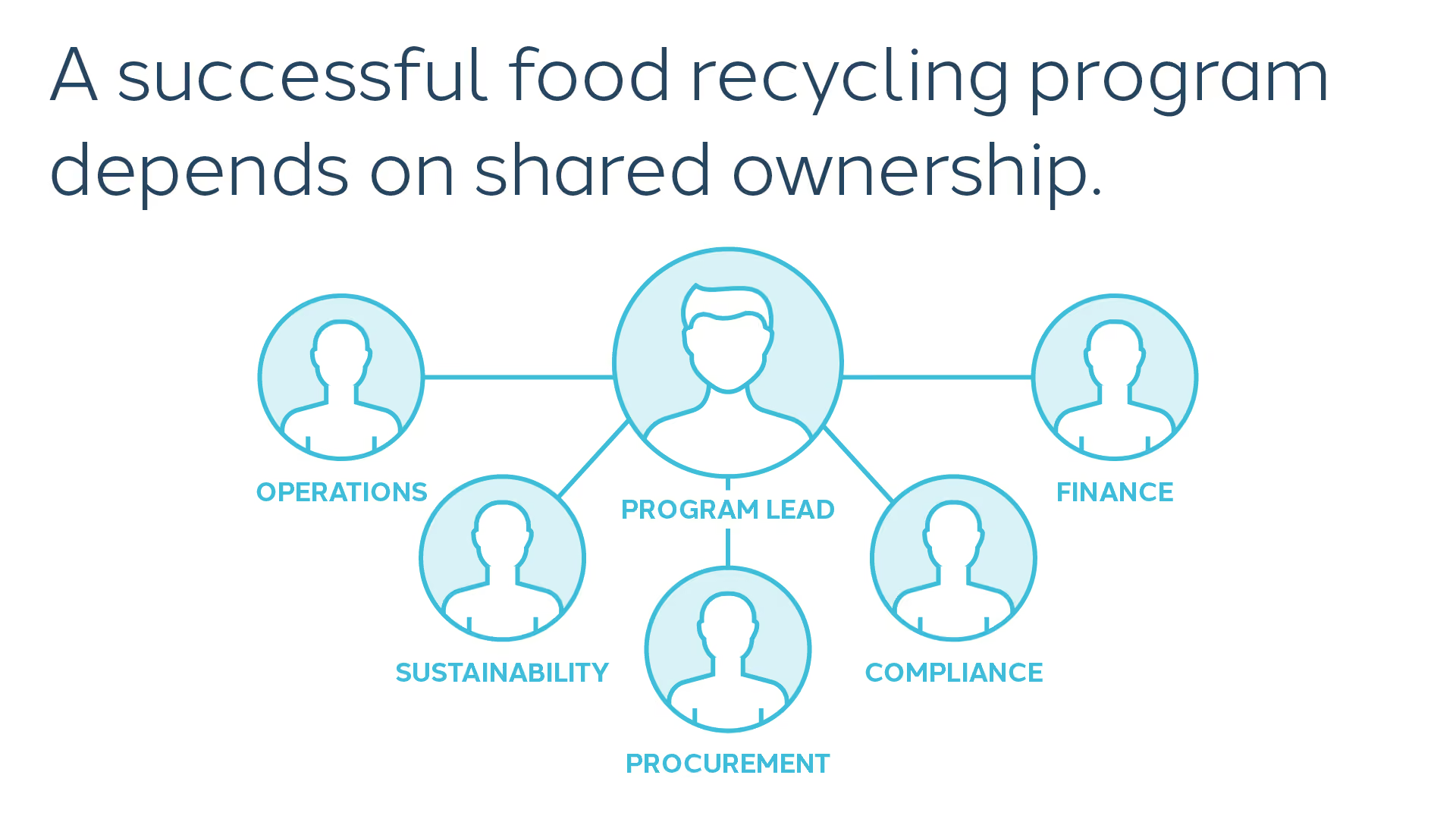
In practice, this team often includes:
- A program lead to coordinate efforts
- An operations or facilities rep to assess workflows and space
- A sustainability, procurement, or compliance stakeholder to align with business goals
- Finance or reporting stakeholders as the program scales
Depending on your organization, finance or reporting stakeholders may also play a role as the program takes shape.
This is the right moment to define roles and responsibilities, establish who owns each part of the process, and align on which aspects of the program matter most to the business. Clear ownership early helps prevent confusion later and keeps the program moving forward.
Aim for milestones, not KPIs
You’ll also want to agree on simple success markers to guide early progress. This doesn’t mean locking in detailed KPIs. Instead, think in terms of near-term milestones — completing a material assessment, scheduling conversations with potential food recycling partners, or outlining pilot locations.
These early markers keep the project moving and help teams stay aligned as the program evolves. Taking the time to establish this structure upfront is a core recommendation from food recycling leaders, including the Natural Resources Defense Council, because it consistently leads to stronger execution.
Right-size the program
Each of these preliminary questions builds on the last, bringing you to a clear understanding of your project scope. With internal resources and stakeholders in place, you now have the information needed to assess what your business is truly taking on.
This is the right time to answer practical questions such as:
- Do you need additional support or resources?
- What challenges are likely to emerge?
- What can you plan for in advance?
Defining scope is also the final step in narrowing down the partners best suited to support your food recycling program. The challenges and constraints you’ve identified should point directly to the capabilities you need a partner to provide. The right partner will also understand the state and federal regulations that apply in each location where food recycling is being implemented, helping ensure the program is built to scale and remain compliant.
Uncertainty is normal
Above all, it’s important to recognize that uncertainty is a natural part of starting a food recycling program. That uncertainty can actually be an asset, allowing businesses to stay curious and flexible as programs take shape and scale. Trying to answer every operational question upfront often leads to fatigue and slows progress.
The foundation established by working through the questions above gives teams the confidence to adapt, refine priorities, and adjust goals as the program evolves. Even national guidance reflects this reality — the U.S. Environmental Protection Agency maintains food recycling strategies that are open to public comment so feedback can be incorporated and approaches can improve over time.
A foundation for the future
Starting a food recycling program is a meaningful undertaking — and one with lasting value. Beyond supporting your business goals, it can also create positive impacts within the communities you serve. By focusing on the core questions early, teams can move forward with confidence, avoid indecision, and adjust plans as needs and priorities evolve.
When questions arise, you don’t have to navigate them alone. Denali’s food recycling experts are here to help you plan, refine, and scale your program. Get in touch to start building a food recycling program designed for long-term success.

Learn more about Denali’s services
Join thousands of businesses turning unsold food and organic waste into valuable new products. Partner with Denali for reliable service—and drive meaningful, sustainable impact.