Common pitfalls when rolling out food recycling programs (and how to avoid them)



Key takeaways:
- Most challenges emerge after launch, under real-world operating conditions
- Contamination often comes down to inconsistent signage, bin placement, and depackaging procedures
- Participation gaps widen when accountability is undefined or training isn't reinforced over time
- Workflows that look good on paper often create friction at peak hours or in tight spaces
- The fix starts with standardizing infrastructure, clarifying ownership, and building in feedback loops
Rolling out a food recycling program is a major milestone, but launch is only the starting point. Most challenges don’t surface immediately but emerge under the real-world pressure of day-to-day operations. Contamination increases, participation varies, and workflows that looked efficient on paper create friction in practice.
These are common structural issues, particularly in complex or multi-site operations. The difference between programs that stall and those that endure comes down to infrastructure, operational clarity, and how well the program was designed to perform in working conditions.
Common food recycling pitfalls
No matter how detailed and well-prepared your recycling program rollout is, every company will face some obstacles. These are just the natural growing pains of implementing anything new. Rather than stressing about avoiding these issues altogether, it's more effective to understand what to watch for so you can adjust as concerns arise. Here are the top three pitfalls to keep in mind:
Contamination
Contamination in food recycling occurs when materials are incorrectly sorted or when organic waste is mixed with non-recyclable materials. In practice, this often stems from confusion between recyclable and landfill streams, especially when signage and bin placement vary from one location to another. When bins are labeled differently across sites or placed inconsistently within a facility, even well-intentioned teams can default to convenience.
Inconsistent processes can also introduce risk, particularly when packaged goods are discarded without a clear procedure for separating materials that cannot go through depackaging, such as glass, Styrofoam, wood pallets, or trash.
In many cases, contamination points back to how the program was designed and supported. Programs that incorporate a depackaging process reduce this risk at the source. Clear signage, consistent placement, and defined handling procedures make the right choice easier at every step.
Lack of participation
While managers and food recycling vendors have planned the procedures and best practices for food recycling, it’s the crew on the ground who will execute the program. If they are not invested in the program's success, problems will begin to arise. Sometimes programs even start strong but can degrade over time due to competing priorities and a lack of training. Turnover can accelerate this decline when new employees are not trained on sorting expectations or when procedures are introduced informally.
Participation can also vary across locations, with some stores or distribution centers adapting to food recycling more quickly than others. Senior management styles will factor into staff motivation, as will the nuanced differences in expectations that naturally occur from place to place. Without clear ownership and reinforcement, expectations shift. Programs tend to lose consistency when accountability is undefined or when recycling is treated as optional rather than operational.
Insufficient workflows
Another challenge with management designing the workflows for food recycling programs is that they may not understand what their staff actually needs. They may think that they have built processes that fit their employees’ day-to-day, only to find that their original plans don’t really work. Processes that are not tested during peak hours or within space constraints often create small inefficiencies that compound over time.
This should not be considered a failure. It is so common for a workflow to seem effective in practice but end up more cumbersome when actually applied. Even when you consult extensively with your staff to build the best workflows, there will always be blind spots that don’t become visible until the program is in full swing.
When workflows add friction, compliance declines. Extra steps that are not accounted for in time or labor planning often result in shortcuts. These disconnects are only amplified when workflows are not considered. Without simple feedback loops or measurement, these issues can persist longer than expected.
How to avoid recycling pitfalls
Good news: by reading this guide, you’ve already conquered the first way to avoid food recycling pitfalls, which is awareness! Knowing what to look for will help you identify issues early, before they really take hold. Once you’ve observed the potential issues, here are some ways to fix them:
Build infrastructure that supports consistency
The first is to implement a strong infrastructure for your food recycling program or work with a food recycling vendor that handles these details for you and removes any complexities for employees.
In practice, this means standardizing key elements across locations, so expectations do not shift from site to site. The program should make the correct action the easiest action. Consider:
- Consistent bin placement and labeling across all facilities
- Defined pickup cadences aligned to actual volume
- Clear procedures for depackaging
When these elements are stable, contamination and participation issues become easier to correct.

Clarify ownership and refine processes over time
Once the infrastructure gaps are addressed, focus on clarifying processes. Not only does this require staying in touch with employees’ workloads, but you must also be willing to monitor and iterate on processes. Establish feedback loops that allow staff to easily report issues and feel heard. Identify leaders who will champion the program and provide thoughtful, honest insight into what is and isn’t working.
Clear ownership is equally important. When accountability is defined at the site level, expectations remain steady even as teams change. Again, remember that processes will inevitably need to be tweaked over time, so approach this with agility and openness. Ideally, your processes will grow and evolve with your company, eliminating out-of-touch procedures.
Simple check-ins, routine retraining, and visible reinforcement help prevent gradual decline. Small adjustments made early prevent larger operational breakdowns later.
Ultimately, the more support you provide for food recycling, the more likely your program is to last. Giving internal support is huge, but also finding the right external support will help shape the longevity of your program. The right partners can advise on training, risk management, and how to tailor the food recycling team by team, location to location. Over time, this creates a program that performs consistently under real operating conditions.
Evolve with your food recycling
Food recycling pitfalls are not a sign that your program is failing. They are early indicators of where structure, clarity, or support may need to be strengthened. Keeping an eye on training, workflows, and infrastructure issues allows you to fix them quickly. As long as you are willing to adjust and evolve a program to fit both your employee and business needs, you can create a strong, long-lasting program.
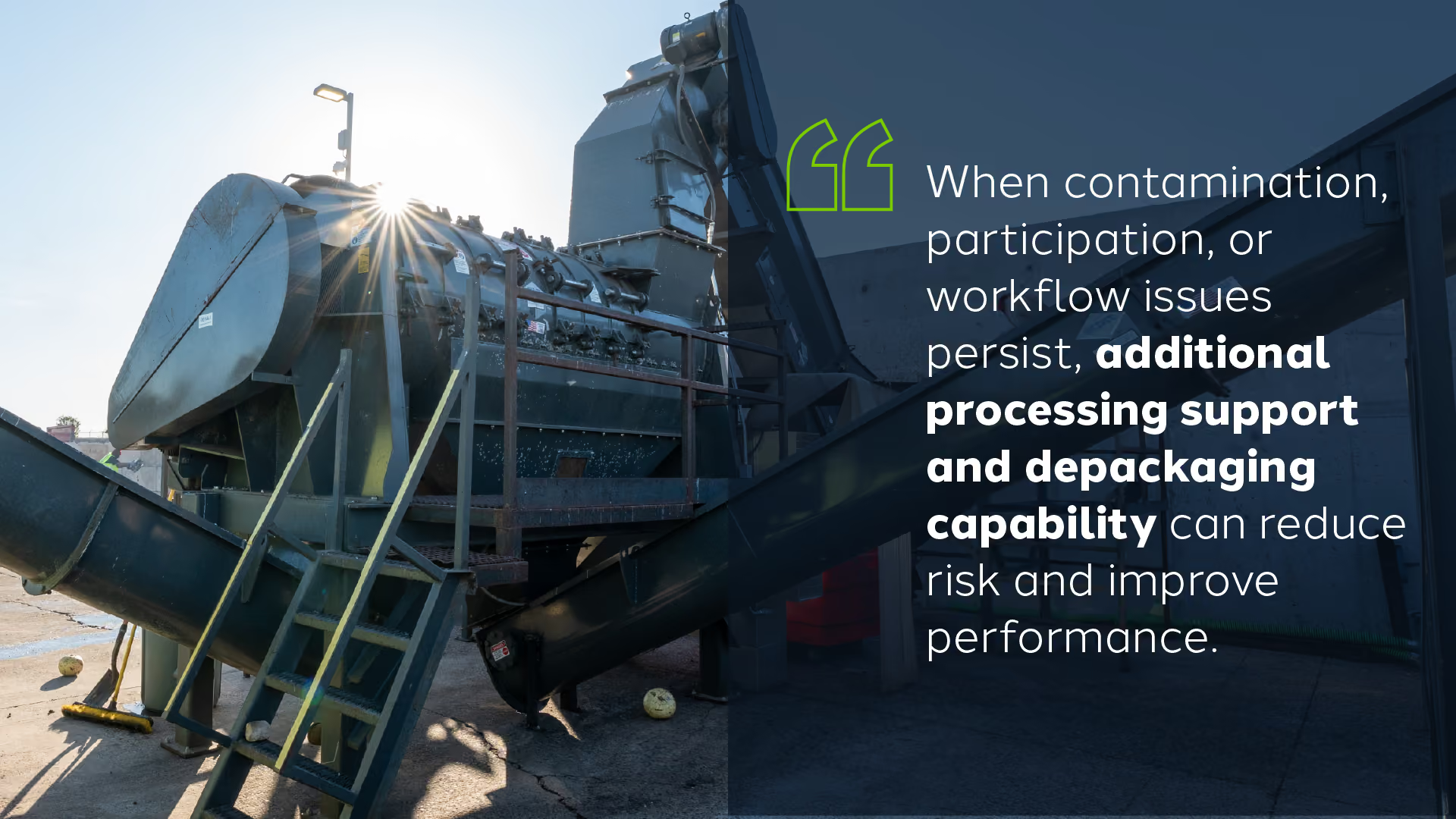
Programs built on consistent infrastructure, clear ownership, and practical workflows tend to stabilize over time. When contamination, participation, or workflow issues persist, additional processing support and depackaging capability can reduce risk and improve performance.
Learn how Denali is powering the future of food waste management, and contact us to get started.

Learn more about Denali’s services
Join thousands of businesses turning unsold food and organic waste into valuable new products. Partner with Denali for reliable service—and drive meaningful, sustainable impact.