The true cost of landfilling: how food waste diversion protects profit and the planet


When you have a business in the food or hospitality industry, margins can be tight. Food processing facilities, grocers, hotels, restaurants, and sports venues are always examining budgets to see where they can save and improve profits. It all ties back to landfills and the rising costs of disposing of excess food. In this blog, we’ll talk about the financial, operational and compliance, environmental, and reputational benefits of food recycling, and why it’s an essential part of any food company’s business strategy.
Rising costs of landfill & disposal fees
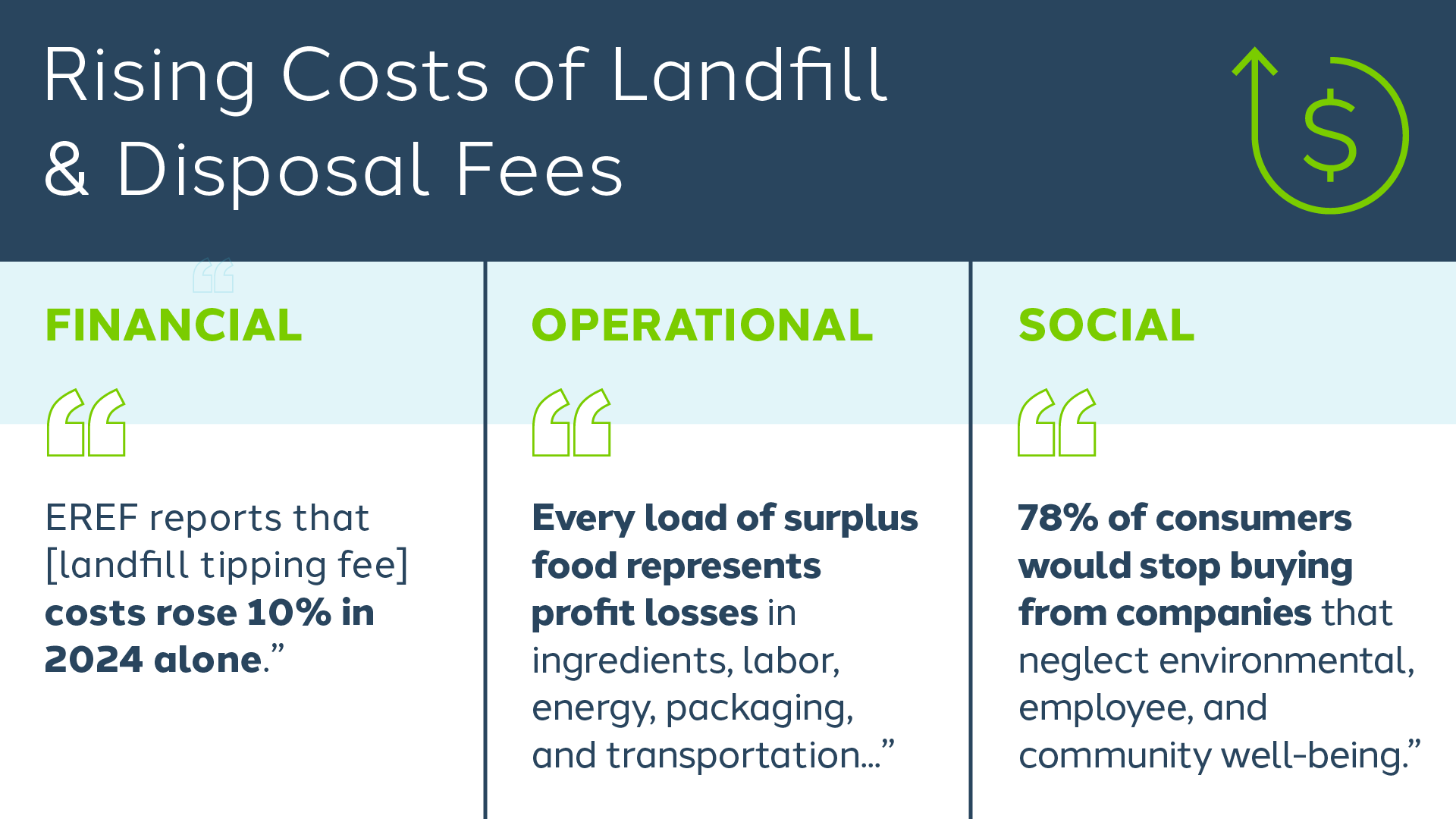
If you feel like your landfill costs have increased over the past years, you would be correct. A 2025 study reports that the national average landfill tipping fee has increased by almost 133% in the past 35 years, and the Environmental Research and Education Foundation reports that costs rose 10% in 2024 alone. At the same time, the number of cities and states enforcing regulations to sustainably dispose of food are increasing. Violations can cost businesses hundreds to thousands of dollars for each fine, which adds up quickly.There are also many hidden operational costs associated with landfilling organic byproducts. Every load of unused food represents profit losses in ingredients, labor, energy, packaging, and transportation as soon as it is thrown out. Food, in particular, is a heavy, moisture-rich organic material. It requires active management of bins and trash compactors to keep them from contaminating the surrounding environment and deterring pests. If unconsumable food volume is unexpectedly high, you’ll have to pay extra for additional, last-minute pick-ups. There is also the time required to train employees and execute proper depackaging of organic byproducts, which can increase labor costs. It can also pull employees away from customers or high-value activities that help increase revenue, such as identifying food for a flash sale.
Landfill & disposal alternatives
With landfill fees climbing and organics disposal regulations tightening, it’s time to integrate food diversion solutions that will improve your bottom line.One way to start saving money is by addressing food waste — or what we at Denali call “unused or unconsumable food.” Here are some of the primary ways you can take control of this aspect of your business.
Food recycling
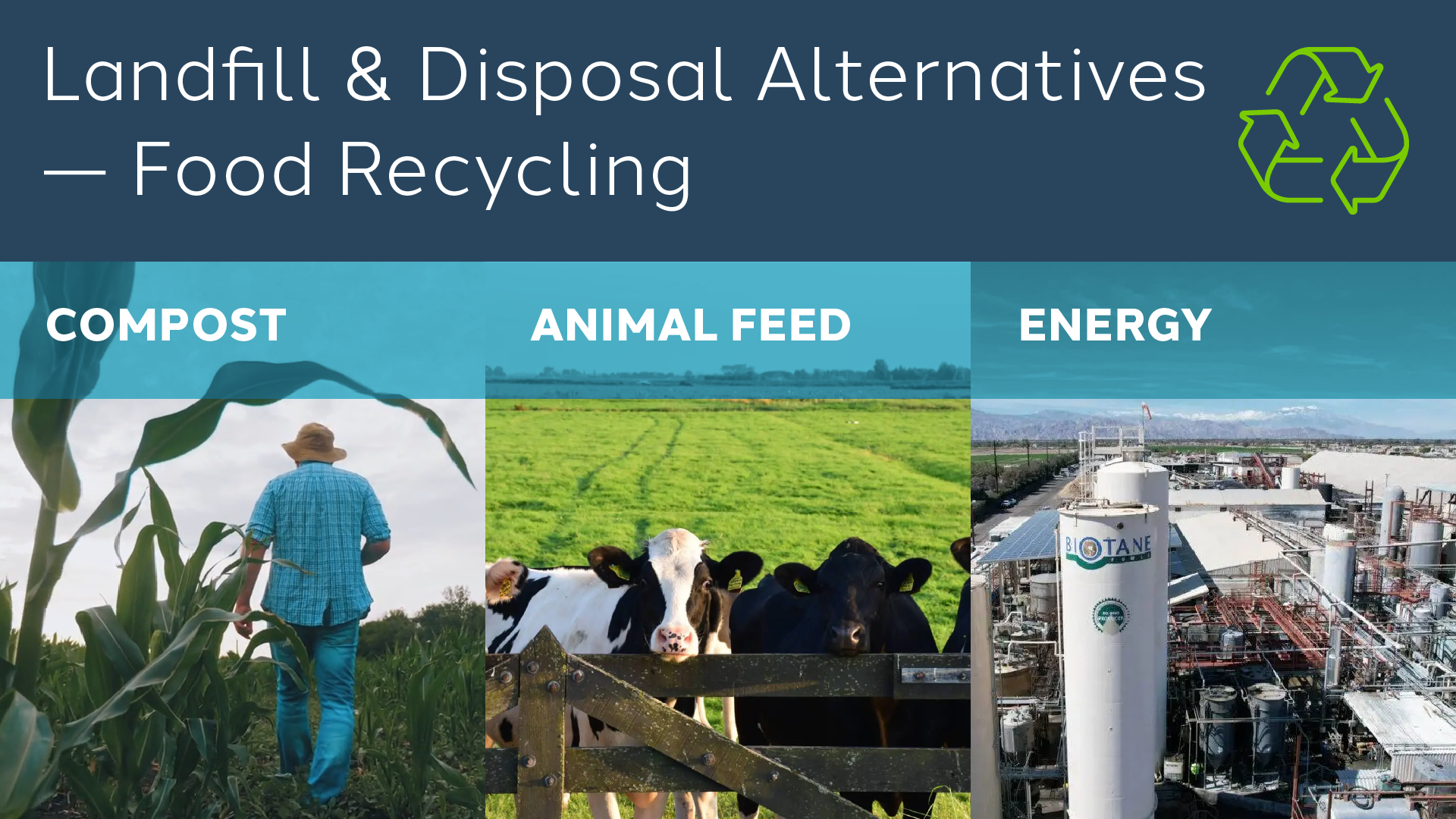
Just because food is unused does not mean it has to go to a landfill. There are many ways to repurpose these valuable materials into something beneficial. For one, food can be donated if it meets safety standards. Food that does not qualify for donation also has plenty of options. This food can be used in regenerative ways, such as compost, animal feed, and converted into energy sources. In some cases, businesses can even earn a return on the redistribution of these organic materials.
Liquid destruction
For companies that specialize in beverage production, disposing of expired or damaged products can lead to higher disposal expenses when they are just thrown away. A more cost-effective and environmentally compliant way to handle this is with official liquid destruction. In this process, the palleted beverages are collected and recycled into compost or other beneficial use products.
Depackaging
Millions of tons of food get discarded into landfills every year because they are not separated from packaging. By implementing a food recycling program powered by mechanical depackaging technology, you will not only reduce the weight of what is sent to the landfill, you will also recover valuable organic material, which can be recycled in more eco-friendly products. You can also eliminate meat rendering costs.
The benefits of food landfill diversion
Food landfill diversion may seem like an extra step in the process, but we promise it’s worth it. The benefits of food recycling and repurposing greatly outweigh the cons, especially when working with a partner, like Denali.
Financial
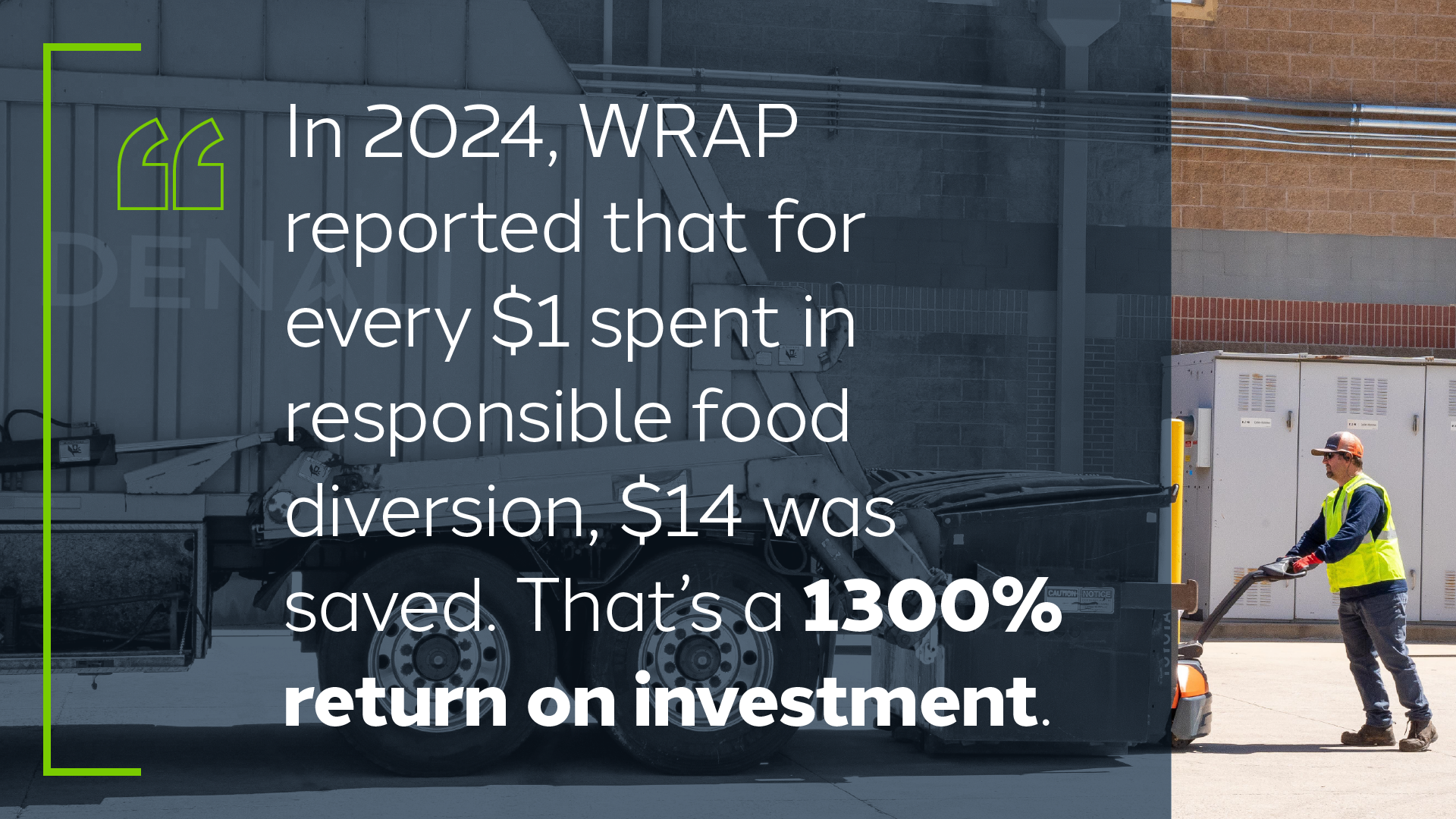
Landfill diversion produces a clear and immediate ROI for companies who handle food. In 2024, WRAP reported that for every $1 spent in responsible food diversion, $14 was saved. That is a 1,300% return on investment. Recycling options can also yield a profit for businesses. In some cases, compost created with collected unused food can even be delivered back to the company and sold on site to customers.
Environmental
Each year, the U.S. generates more than 63 million tons of food waste. Nearly a third — around 31% of all food produced —ultimately ends up in landfills, where it produces methane, which contributes to global warming. But this is where food recycling can flip that script. With landfill space shrinking daily, food recycling keeps unused food out and makes a positive impact on the environment by returning these nutrient-rich, organic materials back into the earth as compost, natural fertilizer, and animal feed.
Operations and compliance
Food recycling can be seamlessly integrated into any operation. These programs can reduce the amount of labor and related expenses needed to manage unsold food. Get more details here: Business case for food waste recycling.Depending on where your business is, there may be statewide organics bans that your company must comply with. Failure to do so can cost hundreds of dollars per fine accrued. By using resources to keep food from landfills, your compliance is not only assured — it is most likely ahead of future regulations that are quickly approaching.
Reputation
There are also hidden social costs of only using landfill services to handle disposing of unused food. Simon-Kucher’s 2024 Sustainability Study reports that 64% of shoppers rank sustainability among their top three purchasing factors. There are many alternative ways to tackle surplus food in a manner that is better for the environment. As sustainability becomes more important to consumers, failing to implement those practices could cost you customers and sales.
Deliver food diversion
In a time where every dollar spent and decision made matters, redirecting unconsumable foods away from landfills helps protect margins, reduces operational headaches, keeps your business compliant, and reflects the habits of increasingly sustainability-minded consumers. Companies that take the time now to rethink how they dispose of unsold food stay competitive and relevant for the future. They also reap the financial benefits of investing in responsible food disposal. If you’re ready to turn an ever-growing expense into a strategic business advantage, get in touch with Denali today to learn more about our food collection services and sustainability-focused offerings.
Learn more about Denali's services
Join thousands of businesses turning unsold food and organic waste into valuable new products. Partner with Denali for reliable service—and drive meaningful, sustainable impact.